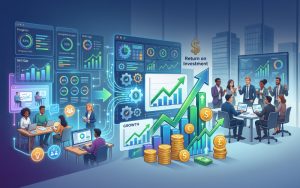


AI in HR in 2026 refers to the use of intelligent systems to automate, predict, and optimize workforce decisions across hiring, learning, and workforce planning.
Most organizations still use it to improve processes. Workflows move faster, but the way work gets done does not change.
Until AI starts influencing workforce decisions, business impact remains limited.
In enterprise environments, this shift depends on how well learning connects with workforce decisions.
What we will cover
Why Most AI in HR Initiatives Fail to Deliver Business Impact
If you have already explored AI in human resources, you have likely seen quick improvements. Hiring becomes faster, manual work reduces, and workflows become smoother.
But step back for a moment.
Are projects moving faster?
Are skill gaps closing?
Is output improving across teams?
In many cases, it is not. The issue lies in focus. Most organizations apply AI to tasks. Very few apply it to workforce decisions.
This gap shows up in real business outcomes:
- Production targets get missed because the right skills are not available
- Teams rely on contractors because internal capability is unclear
- Hiring costs rise due to reactive workforce planning
- Training programs run without improving performance
This creates a disconnect. HR becomes efficient, but workforce capability remains unchanged.
In our experience working with enterprise learning teams, this often happens because learning remains disconnected from decision systems. AI identifies gaps, but no structured intervention closes them.
Want a deeper view on how workforce capability actually evolves?

What AI in Human Resource Management Really Means in 2026
AI in human resource management runs on machine learning and predictive analytics. This helps organizations make decisions across hiring, learning, performance, and workforce planning with more clarity and consistency.
You are no longer automating processes. You are improving decisions that shape outcomes.
This changes how your organization operates:
- Task execution improves because decisions improve
- Skills take priority over rigid role definitions
- Workforce planning becomes continuous instead of reactive
For this to work, learning cannot remain a standalone function. It needs to operate as a response system to workforce insights.
At Mitr Learning and Media, we see this shift clearly. AI surfaces what needs to change. Learning systems drive that change at scale.
The AI Workforce Decision Loop
To understand where value comes from, look at how decisions flow across your workforce.
- Input – Workforce data, skill profiles, performance signals, business demand
- Analysis – Pattern detection, predictions, and skill gap identification
- Decision – Hiring priorities, task allocation, learning recommendations, mobility actions
- Execution – Workforce deployment, training delivery, role transitions
- Feedback – Performance outcomes refine future decisions
When learning is embedded into this cycle, it becomes the execution layer that closes skill gaps. This is where AI starts influencing real business outcomes.
AI in HR Use Cases That Transform Workforce Decisions
The value of AI becomes visible when decisions improve. Tools alone do not change outcomes.
Talent Acquisition Intelligence
Traditional hiring relies on resumes and interviews. These inputs often fail to predict performance.
AI evaluates candidates using skill data, experience patterns, and performance benchmarks. It assigns a probability score for role success. Stronger candidates start standing out earlier. Hiring tends to move faster from there. Decisions feel clearer, and mis-hires reduce over time.
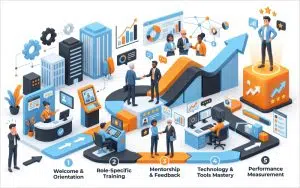
However, hiring alone does not solve capability gaps. Without structured onboarding and role-based learning, even strong hires take longer to reach expected performance.
Workforce Planning and Skill Forecasting
Workforce planning often reacts after problems appear. That delay increases cost and disrupts execution.
AI analyzes project pipelines, historical demand, and workforce capability. It forecasts future skill requirements. These insights form the foundation of AI in HR analytics.
The next step is critical.
Forecasted gaps need to translate into learning interventions. Without that, planning remains theoretical. With it, organizations start building capability before demand peaks.
Learning and Development Optimization
Training programs often remain generic. They rarely reflect real business needs. AI recommends learning paths based on role requirements, performance data, and skill gaps.
But recommendations alone do not create impact.
Learning experiences need to be designed for real work environments. They should align with job tasks, performance expectations, and operational constraints.
This is where organizations start seeing measurable outcomes. Learning becomes targeted, timely, and directly linked to business execution.
Performance and Productivity Intelligence
Periodic reviews delay visibility into performance issues.
AI tracks signals such as task completion, output trends, and collaboration patterns. Managers gain continuous insight. They respond earlier, and productivity improves.
To sustain this improvement, learning must respond to performance signals.
When performance gaps trigger targeted learning interventions, improvement becomes continuous instead of reactive.
Employee Experience and Engagement
Learning engagement surveys provide delayed feedback. By the time results arrive, risk has already increased.
AI detects patterns in behavior and feedback signals. It identifies early signs of disengagement. This enables timely intervention and improves retention.
Intervention is not only managerial. It often involves role clarity, skill confidence, and growth pathways. Structured learning plays a direct role in addressing these factors.
HR Operations Automation
HR teams spend significant time on repetitive work. Automation handles workflows, queries, and documentation. This frees capacity for strategic workforce planning. HR moves from managing processes to shaping workforce capability.

Traditional HR vs AI-Driven Workforce Models
Scroll right to read more.
| Area | Traditional HR | AI-Driven Workforce |
|---|---|---|
| Decision Making | Past data, manager judgment | Predictive, real-time decisions |
| Workforce Structure | Role-based | Skills-based |
| Learning | Standard training | Personalized, role-based learning |
| Performance | Periodic reviews | Continuous insights |
| Talent Movement | External hiring | Internal mobility |
| Workforce Planning | Reactive | Forecast-driven |
| HR Operations | Manual processes | Automated workflows |
| Skill Visibility | Limited visibility | Real-time visibility |
This shift directly affects how quickly you respond to business demand and how effectively you deploy talent.
Learning plays a central role in this transition. It enables movement from identified gaps to actual capability.
Benefits of AI in HR
AI delivers value when it improves measurable business outcomes.
Productivity Gains
Better alignment between skills and tasks increases output. Organizations adopting AI often report measurable productivity improvements. The impact becomes more consistent when learning systems actively close identified gaps.
Cost Efficiency
Hiring becomes more targeted. Time-to-hire reduces. Internal mobility improves, and recruitment costs decrease.
Organizations that invest in reskilling reduce dependency on external hiring.
Workforce Optimization
You gain visibility into underutilized talent. Work gets distributed based on capability. Utilization improves across teams.
Retention and Engagement
Employees disengage when roles do not match their capabilities. Early insights help address this and improve retention in critical roles.
Learning pathways that support growth and role readiness play a key role here.
Skill Alignment
You understand both current and required skills. This enables proactive gap closure and faster execution.
AI in HR Examples Across Industries
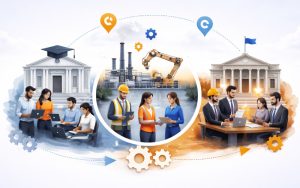
AI delivers value when it changes how work happens in real environments.
In many operations, supervisors assign tasks based on availability. AI-driven allocation considers skill fit, urgency, and past performance. Task assignments become more precise. Downtime reduces.
When combined with role-based training, this ensures that workforce capability evolves alongside operational demand.
Pharma: Adaptive Compliance Training
Compliance training often follows a uniform structure. Adaptive systems adjust training based on role, risk exposure, and performance. Focus shifts to critical areas and compliance improves.
Learning becomes more relevant and easier to apply in real scenarios.
Technology: Continuous Workforce Reskilling
Organizations usually depend on external hiring for new skills. AI changes that by highlighting adjacent capabilities and suggesting reskilling paths.
Structured learning programs enable this transition. Over time, this leads to stronger internal mobility and faster adaptation.
How to Implement AI in HR
Many organizations start with technology when they think about AI and HR. In practice, the starting point is the workforce.
At Mitr Learning and Media, stronger results emerge when AI is aligned with real capability gaps and business needs.
Step 1: Define Workforce-Level Problems
Start with business impact, not tools. Identify where gaps are affecting execution. This could include delayed project delivery, rising hiring costs, or low productivity in key roles.
Be specific about the problem you want AI to solve.
Step 2: Map Skills and Capabilities
Build visibility into what skills exist across your workforce. This includes current capabilities, proficiency levels, and gaps against future demand.
Start with critical roles and expand gradually.
Step 3: Integrate Systems
Connect HR, learning, and AI systems so data flows across hiring, performance, and training. Without integration, insights remain fragmented.
Even partial integration can unlock better decision-making.
Step 4: Design Learning Interventions
Translate AI insights into structured learning experiences.
This includes:
- Role-based learning paths
- Performance-linked training modules
- Scenario-based learning content aligned with real tasks
This step determines whether AI insights lead to actual capability building.
Step 5: Establish Governance
Define how data will be used, who owns decisions, and how bias will be monitored. Governance should cover data privacy, model transparency, and accountability.
Step 6: Measure Outcomes
Track metrics that reflect business impact, not just efficiency. Focus on productivity, workforce utilization, retention, and skill coverage.
These indicators show whether AI is improving workforce capability.
Key Risks and Strategic Trade-offs in AI Adoption
- Automation vs Human Judgment – Human oversight remains critical
- Speed vs Fairness – Bias risk increases with poor data quality
- Personalization vs Privacy – More personalization increases data exposure
- Centralized vs Distributed Control – Balance control with flexibility
Understanding these early helps avoid unintended risks.

Frequently Asked Questions About AI in HR
What are the main use cases of AI in HR?
AI is used in hiring, workforce planning, learning personalization, performance tracking, and employee engagement. It focuses on improving workforce decisions and aligning skills with business needs.
How does AI improve workforce productivity?
AI improves productivity by aligning skills with tasks and enabling faster decisions. When combined with targeted learning, it accelerates capability development and reduces inefficiencies.
What are the risks of AI in HR?
Key risks include bias, data privacy issues, lack of transparency, and over-reliance on automation. Governance frameworks help manage these risks.
Can AI replace HR professionals?
AI enhances HR capabilities but does not replace professionals. It allows HR teams to focus on strategic workforce decisions.
How can enterprises implement AI in HR?
Enterprises should align AI with business goals, integrate systems, ensure data quality, and translate insights into structured learning interventions.
Which industries benefit most from AI in HR?
Manufacturing, healthcare, pharma, and technology benefit due to complex workforce needs and skill dependencies.
What is the future of AI in HR?
The future lies in skills-based organizations where AI continuously aligns workforce capabilities with business demand, supported by adaptive learning ecosystems.
AI can identify what your workforce needs next. But insight alone does not build capability; execution does.
At Mitr Learning and Media, the focus is on translating workforce insights into structured learning experiences that drive measurable outcomes.
If you are evaluating AI in human resources from a workforce capability perspective, the next step is not just choosing tools. It is designing how learning fits into your decision system. If this is something you are exploring, a quick call can help you understand where you stand today.