

Learning engineering in L&D is gaining attention as organizations rethink how employees build critical skills. AI in learning can now generate training content quickly. However, faster content creation does not guarantee better workforce skills. Many companies still measure success through course completion rates. Those numbers show participation. They rarely reveal whether employees perform better on the job.
Learning engineering in L&D addresses this gap. Organizations are moving beyond standalone courses. They now build learning systems that use data and experimentation. AI helps refine these systems and support skills development.
Key Takeaways
- Learning engineering is emerging as a new discipline in enterprise L&D.
- AI in learning accelerates content creation but does not solve skill gaps alone.
- Modern learning systems rely on data, analytics, and experimentation.
- Organizations are shifting from course design toward systems that improve workforce skills.
The Future of Instructional Design in the Age of AI
For decades, instructional design focused on course development. Learning teams built structured training programs and delivered them through an LMS. This model worked when skills changed slowly.
Leaders now expect measurable business outcomes from learning investments. Completion metrics rarely explain whether employees perform tasks more effectively.
AI in learning is accelerating content creation. Training materials, quizzes, and knowledge summaries can now be generated in minutes. Yet faster content production exposes a deeper issue. Training content alone cannot close workforce skill gaps. L&D must now move beyond content production. Learning teams need systems that support continuous skilling.

Instructional Design vs Learning Engineering
Scroll right to read more.
| Dimension | Instructional Design | Learning Engineering |
|---|---|---|
| Focus | Course development | Capability development |
| Design process | Linear course design | Iterative experimentation |
| Measurement | Completion and satisfaction | Skill proficiency and performance outcomes |
| Technology | Authoring tools and LMS | Integrated learning systems and analytics |
| Optimization | Periodic content updates | Continuous improvement using data |
Instructional design remains valuable. It helps structure learning experiences effectively.
Learning engineering expands this discipline by integrating data, experimentation, and analytics into learning systems, a model explored in recent learning engineering research.

The Architecture of Modern Learning Systems
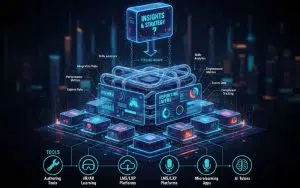
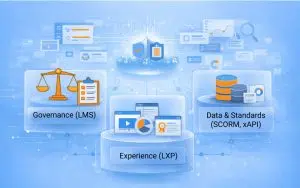
Learning engineering requires infrastructure supported by workforce analytics. This infrastructure integrates workforce data, skills frameworks, learning platforms, and enterprise learning systems.
Learning Data Infrastructure
Modern learning ecosystems draw data from several enterprise learning systems. These often include the LMS, HR platforms, skills systems, and performance management tools.
If these systems stay disconnected, skill gaps become harder to identify. Leaders may struggle to see where skill improvement is required.
Skills Frameworks and Learning Signals
Many organizations now use structured capability models. These frameworks map roles to specific skills and competencies. Workforce training programs align with these frameworks. This alignment ensures training addresses real workforce needs.
Learning systems also track signals from learning activity and learning engagement. These signals include learner engagement, assessment results, and how employees apply knowledge on the job.
This information helps organizations understand skills development. Leaders gain clearer visibility into workforce readiness across teams and functions.
Core Components of a Learning Engineering System
Learning engineering in enterprise L&D includes five interconnected components.
Capability Architecture
Organizations define capability frameworks for workforce skills. These frameworks identify critical skills required for each role and business function.
Experimentation and Optimization
Learning teams test training interventions through structured experimentation. Data reveals which learning approaches produce stronger performance outcomes.
AI-Assisted Learning Intelligence
AI analyzes learning data and workforce skill patterns. Systems recommend targeted learning interventions. AI can also help prioritize skill improvement initiatives.

The Learning Engineering Loop
Learning engineering operates through an iterative cycle. This cycle connects capability design with performance outcomes.
Step 1: Capability Mapping
Organizations identify the critical workforce skills required to achieve strategic objectives. These capability models guide learning investments.
Step 2: Learning System Design
Learning teams design interventions. These interventions help employees develop the required capabilities.
Interventions may include learning pathways, simulations, and performance support tools.
Step 3: Learning Data Capture
Enterprise learning systems collect signals from training platforms. They also collect signals from workplace systems and performance metrics. These signals reveal how employees apply knowledge in real situations.
Step 4: Learning Experimentation
Teams test alternative learning approaches. Organizations may compare different training formats.
They may also test different practice models. This helps identify which method produces stronger skill acquisition.
Step 5: Continuous Capability Optimization
Learning analytics and data insights guide ongoing adjustments to learning programs. Organizations refine learning interventions using measurable performance outcomes.

How AI Acts as a Design Co-Engineer in L&D
AI in learning increasingly supports learning teams. It helps design and improve training systems.
AI as a Learning Data Analyst
AI systems analyze large volumes of learning data using learning analytics. These insights reveal patterns in skill development. This analysis helps leaders identify gaps in workforce skills. Leaders can address these gaps before operational performance suffers.
AI as a Learning Design Assistant
AI can suggest learning pathways based on employee capability requirements. Systems can also recommend training content. This support accelerates design decisions. Instructional expertise remains essential for interpretation.
AI as a Capability Prediction Engine
AI models can forecast future skill needs. They analyze workforce trends and operational data. Organizations gain early visibility into emerging capability gaps. This predictive insight supports proactive skilling and workforce development planning.
Measuring Workforce Capability Instead of Course Completion
Traditional training metrics focus on participation. Completion rates and learner satisfaction offer limited insight without strong workforce analytics. Enterprise leaders now require metrics that reflect operational performance in workforce training.
Capability Metrics That Matter
Organizations track indicators such as time to competency and skill proficiency levels.
These metrics connect learning investments with measurable business outcomes.
When capability metrics improve, organizations often observe productivity improvements.
Exact performance gains vary by industry. Organizations should validate improvements using internal operational data.
The Learning Engineering Maturity Model
Organizations progress through several stages as learning systems evolve.
Scroll right to read more.
| Stage | Description |
|---|---|
| Level 1 – Course-Centric Learning | Training relies on static courses and completion metrics |
| Level 2 – Digital Learning Platforms | Organizations implement LMS platforms and digital learning libraries |
| Level 3 – Skills-Based Learning | Learning programs align with workforce capability frameworks |
| Level 4 – Learning Engineering | Learning systems use data analytics and experimentation |
| Level 5 – AI-Augmented Learning Systems | AI continuously analyzes workforce capability development |
This maturity progression helps leaders evaluate current learning strategies. It also helps identify improvement opportunities.
How L&D Teams Can Transition to Learning Engineering
Develop Data Capabilities
Learning teams must understand workforce data and performance metrics. Data literacy allows leaders to evaluate training effectiveness.
Build Interdisciplinary Learning Teams
Future L&D teams include instructional designers, learning engineers, and data analysts. They may also include technology specialists. These teams collaborate to design learning systems. Their goal is to strengthen talent development across the organization.
Adopt Experimentation-Driven Learning Strategies
Organizations benefit from testing interventions used in skills-based learning. They should not rely solely on predefined training models.
Structured experimentation helps strengthen the overall learning strategy and identify the most effective learning approaches.

Frequently Asked Questions
What is learning engineering in corporate training?
Learning engineering combines learning science, data analysis, and engineering methods to design data-driven learning systems. These systems help organizations measure skill development and support capability growth beyond traditional course-based training.
How is AI used in enterprise learning and development?
AI helps learning teams study patterns in employee training activity. It can highlight skill gaps and suggest learning pathways for different roles. Many organizations also use AI tools to support workforce analytics and capability planning.
Will AI replace instructional designers?
AI will not replace instructional designers. Instead, it changes how they work. Designers now focus more on learning system design and experimentation. AI tools support analysis and content generation.
What skills do learning engineers need?
Learning engineers combine expertise in learning science, data analytics, and technology systems. They design learning architectures and analyze workforce capability data. Their work helps organizations optimize learning ecosystems.
How can organizations implement learning engineering?
Organizations begin by building workforce capability frameworks. They then integrate learning data across enterprise systems. Learning teams run experiments to evaluate training effectiveness. Analytics helps improve workforce capability development over time.
Organizations that adopt learning engineering gain clearer visibility into workforce readiness. They move beyond course completion metrics. Learning becomes a performance system.
AI will continue to influence how enterprises design learning systems. Technology alone will not create results. Organizations still need clear learning architecture and strong capability frameworks.
Mitr Learning and Media supports enterprises in building practical learning ecosystems. These systems focus on skill growth and measurable workforce outcomes.
Teams across many organizations are testing AI in their learning programs. Some are also moving toward capability-based training. Clear structure helps make this shift manageable.
You can schedule a conversation with Mitr Learning and Media to discuss your workforce capability goals.