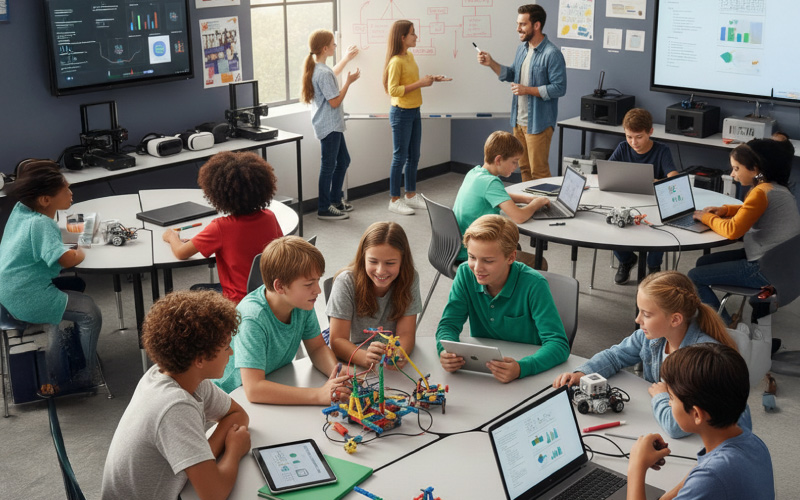


AI in education is now a standard part of classrooms and online AI learning platforms. By 2025, up to 86% of students worldwide were already using AI tools, and about 60% of U.S. teachers have adopted them in daily teaching practices. What’s new is the confusion around how AI in teaching should be used. Across schools and universities, we see institutions adopting artificial intelligence in education faster than they can define responsibility, boundaries, or success criteria.
The real risk is not replacing teachers. It is deploying AI in teaching without clarity on where human judgment must remain in control. When that happens, learning quality drops, trust erodes, and systems create more work instead of reducing it.
This guide is written for education leaders who need practical answers, not predictions. It breaks down where artificial intelligence on education delivers value today, where it consistently falls short, and how institutions can use it without weakening teaching quality.
The goal is not to push AI in education. It is to help decision-makers use it with intent, accountability, and clear educational outcomes. This guide highlights the practical use of AI in education to support students, teachers, and institutions effectively.

What is AI in education used for today?
AI in education supports students, teachers, and schools in clear, practical ways. Most of the work it does right now focuses on three areas: making personalized learning, saving time, and organizing student data. You can find these tools in regular classrooms and on almost every online AI learning platform today.
Personalizing learning paths with AI for Educators
AI personalization tools track student progress and suggest specific resources. It changes how hard a task is while the student is working. This approach challenges faster learners and supports students who struggle.
Example: Two students in the same math class get different practice questions. One works on geometry logic because they are ahead. The other reviews basic angles because they need more practice.
Automated assessments and feedback
AI for educators includes tools that grade simple assignments and give quick feedback on things like grammar or spelling. Recent research shows that AI grading systems can cut teachers’ workload by around 37% and automatically handle nearly half of multiple-choice assessments. This allows students to improve their work immediately without waiting for a teacher.
Example: The system grades multiple-choice tests immediately and sends longer essays to teachers for review.
Tracking learning patterns and risks
By looking at student performance data, online AI learning analytics can identify students who might fail before it actually happens. It looks for patterns where a student gets stuck on the same problem repeatedly. This is one of the most practical examples of artificial intelligence in education today.
Example: A teacher checks a dashboard and sees that 15 percent of the class stops at the same point in the lesson. This signals that the explanation may be unclear.
Identifying curriculum gaps at scale
Institutions use AI curriculum analysis to observe how students perform across courses. This shows which lessons are hard for many learners and which materials need updates.
Example: A university notices repeated errors across five different cohorts and updates the core learning material to better explain the specific concept.
Optimizing resource allocation for institutions
The use of artificial intelligence in education also supports leadership decisions. AI-powered education management helps leaders make decisions about staff and funding. It uses student performance trends and enrollment data to guide those choices.
Example: AI in teaching spots courses likely to have high enrollment and highlight tutoring centers that might need extra staff.

How do schools and online platforms use AI to help students?
Deployment differs across educational institutions and AI-powered online learning platforms. While AI functions remain similar, deployment challenges differ across large universities, small schools, and AI online learning platforms. Context and scale determine how AI for educators supports learning and teaching.
Supporting large classrooms and online cohorts
As class sizes grow, it becomes harder to spot early warning signs. AI learning analytics helps bring those students into view, so teachers can intervene and keep learning moving forward.
Assisting teachers with lesson planning and updates
AI lesson planning tools suggest lesson outlines or make explanations easier for different grade levels. This is a clear example of AI in teaching helping educators reduce preparation time and focus on high-impact instruction. Teachers go through these suggestions, tweak them, and make sure everything is accurate. The teacher’s judgment is still what counts.
Online AI Learning for on-demand academic support
Students can use AI tutoring systems to ask questions even after class. Online AI learning tools offer explanations or additional practice exercises. This supports classroom teaching but does not replace educators or in-person guidance.
What Are the Real Benefits of AI in Education?
The real benefits of AI in education are clear. Students receive learning that matches their pace. Teachers spend less time grading and handling routine tasks. AI in teaching helps students understand lessons better and improves accessibility. Schools use learning data to make smarter decisions. Schools use online AI learning data to guide decisions. Classrooms then turn that data into lessons that engage all students.
Scaling Support with Intelligent Tutoring
One of the ongoing challenges of AI in education is supporting students once class time ends. Across schools (k-12) and online AI learning platforms, learners often need help at irregular hours. Artificial intelligence online learning systems now provide this support on demand. Within AI in education, these tools explain concepts in simple terms and let students work through mistakes privately, without classroom pressure.
Reducing Teacher Burnout Crisis with AI for Educators
AI personalization tools track student progress and suggest specific resources. Surveys indicate that AI-based personalized learning platforms improve student performance and increase engagement, and early warning systems have been linked to a ~15% increase in student retention. This approach adjusts task difficulty while the student is working.
Expanding Access Through Inclusive Online AI Learning
AI helps institutions reach more students while supporting diverse needs. Real-time translation allows courses to serve multilingual learners, and accessibility tools like captions and simplified text make online classes easier to follow. This ensures quality education is available to everyone.
The Shift Toward Dynamic Smart Content
The era of static and expensive textbooks is ending. Decision makers are now investing in dynamic curriculum tools. These tools re-bundle information into micro-learning modules and interactive simulations. AI content generation tools keep learning materials updated with 2026 industry standards. This ensures students always learn from the most current information available.
Strengthening Workforce Alignment
A lot of students finish school without really knowing what jobs suit them. AI career tools can point out what they’re good at and suggest careers that are actually in demand. With this kind of AI counseling, students can see how their skills match the job market and make choices that lead to real opportunities.
Ensuring Objective Assessment
Educational transparency is key to trust. Human grading can be affected by bias or tiredness. AI grading tools ensure fairness and reduce bias in evaluations, increasing trust in eLearning outcomes.
What Are the Limitations of AI in Education?
Knowing what AI cannot do is important for using it well in the classroom. Despite benefits, artificial intelligence on education has clear limitations. AI in teaching cannot fully understand creativity, motivation, or ethical reasoning.
AI cannot understand a student’s intent, feelings, or motivation
AI can tell you that a student answered correctly. It cannot tell you whether they guessed, copied a pattern, or truly understood the idea. In real classrooms, teachers notice hesitation, repeated mistakes, or silence during discussions. Those signals matter. They are often the difference between surface learning and real understanding, and they only become visible through human observation.
AI cannot handle creativity, ethics, or open-ended discussions
There is no single right answer in subjects like literature, ethics, or debate. These conversations depend on perspective, context, and real experience. AI can summarize viewpoints or suggest responses, but it does not engage in dialogue. It does not question intent or challenge reasoning. That role still belongs to teachers who guide discussion and help students think beyond templates.
Relying too much on AI can weaken critical thinking
When answers arrive too quickly, students stop sitting with the problem. Over time, this reduces their ability to reason, question, and work through uncertainty. AI in teaching works best when it supports practice, not when it removes struggle entirely. Learning still needs effort, mistakes, and reflection, and teachers decide where that balance should sit.
These limits show why teachers must stay involved when AI is used in classrooms.
Can AI in Education Be Trusted?
Trust requires responsible AI adoption, data transparency, and careful governance.
Bias in AI-based learning systems
AI trained on limited data may favor certain learning styles or backgrounds, creating inequities.
Student data privacy and transparency concerns
Unclear use of student performance data may breach privacy or erode trust. Institutions should maintain transparency about AI applications.
Accountability when artificial intelligence in education gets it wrong
Institutions, not algorithms, must own decisions affecting learners. Clear policies and regular audits ensure responsible use of AI in learning.
What responsible AI adoption in education looks like in practice
Responsible use of AI in education means institutions use technology carefully to support learning without replacing teachers. They test AI tools and watch how students respond. Teachers adjust lessons when needed. They guide students while AI supports learning. This keeps students engaged, improves understanding, and makes classrooms inclusive.
The future of education is not AI-first. It is learning-first, supported by AI and guided by human judgment. Institutions should pilot AI thoughtfully, monitor results, and scale only with accountability in place. Mitr Learning and Media helps buyers navigate this journey by providing expert guidance on AI adoption. We offer transparent AI implementation strategies and ongoing support to ensure technology enhances learning without replacing teachers.
Talk to our specialists and design AI solutions tailored for your institution.
FAQ's
1. How can K–12 teachers boost student engagement in digital learning?
Teachers boost engagement by adding quizzes, polls, and small group activities. They encourage students to work together, share ideas, and give feedback right away. This keeps students interested and helps them really understand the concepts.
2. What strategies make online learning effective for K–12 schools?
The most effective online learning keeps lessons short and clear. Teachers give students hands-on exercises and guide them as they work. Students test ideas, think about what they do, and move at their own pace.
3. How can schools design age-appropriate digital content for students?
Schools should create K-12 digital learning content that matches each age group. Younger students enjoy visuals, animations, and simple interactive activities. Older students do better with projects, real-world problems, and group discussions.
4. Which edtech tools work best for personalized learning in K-12 classrooms?
The best edtech tools for K-12 digital learning let each student learn at their own pace. Teachers quickly spot which students need extra support. When students collaborate and share ideas in digital learning activities, lessons become more engaging, and students learn better from each other.
5. What are the common mistakes to avoid in K-12 digital learning?
Common mistakes include long videos without interaction and one-size-fits-all platforms. Giving too much content at once or providing little teacher guidance can overwhelm students. Ignoring accessibility needs also makes learning harder. These issues reduce engagement and overall learning effectiveness.