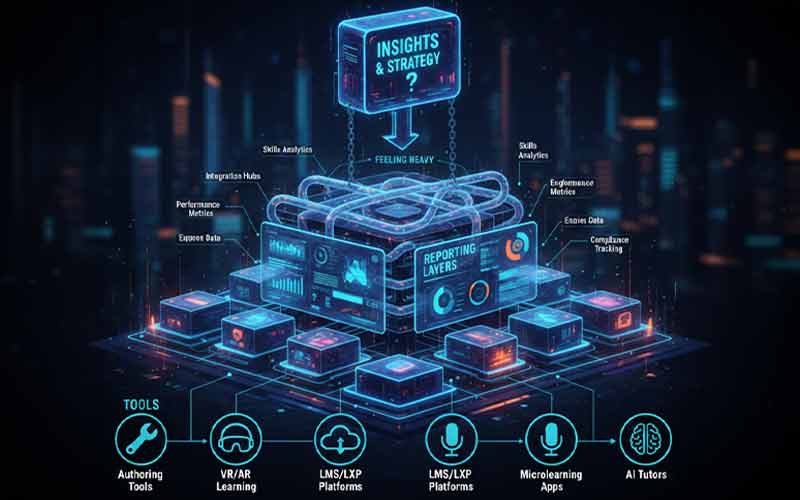

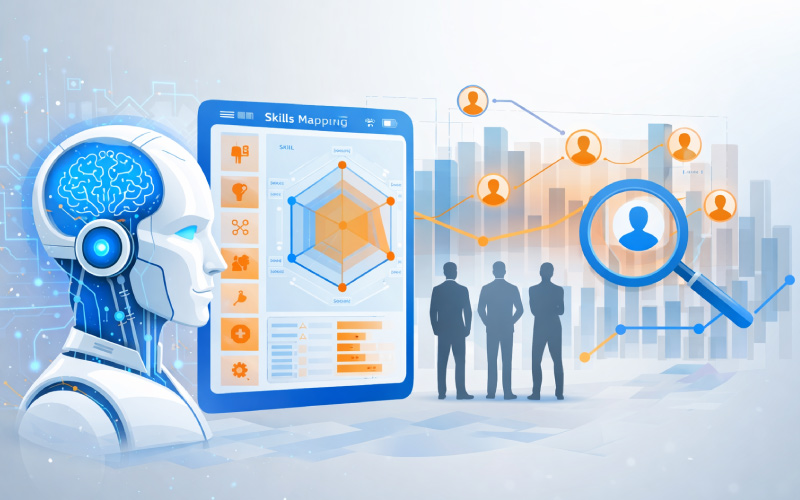
AI-driven assessments rely on adaptive algorithms and real performance data to evaluate workforce capability over time. They go beyond traditional tests that simply confirm knowledge at a single point. Instead, they highlight emerging skill gaps and indicate succession readiness. The result is clearer input for workforce planning decisions across the enterprise.
Assessment without prediction is measurement without strategy.
Most organizations track courses completed and performance ratings. Very few can clearly see where capability risk is building. Traditional assessments confirm what someone achieved in the past, but they rarely indicate whether the workforce is prepared for what comes next. In uncertain markets, that gap matters. If testing happens only at intervals, planning stays reactive. Assessments should do more than fill reports. They should guide real decisions about people and capability.
Key Takeaways
-
- Traditional assessments confirm performance. They do not anticipate workforce risk.
- Workforce intelligence connects AI-driven assessments, skills frameworks, and predictive analytics.
- Talent modelling quantifies succession readiness and internal mobility.
- Predictive workforce planning reduces hiring dependency and capability exposure.
- Governance and explainability enable scalable enterprise adoption.
What Is Workforce Intelligence?
Workforce intelligence is an integrated system. It brings together AI-driven assessments, structured skills frameworks, and performance data. It also uses predictive models to support workforce planning and enterprise decisions.
Limitations of Traditional Assessments in Modern Workforce Planning
Snapshot Testing vs Continuous Capability Visibility
Periodic testing produces static scores rather than capability trajectories. Leaders see current performance but cannot determine whether critical capabilities are strengthening or declining.
Without continuous capability tracking, organizations miss early signals of skill volatility. Predictive workforce planning becomes impossible.
Fragmented Assessment Data Across LMS and HR Systems
Many enterprises operate disconnected LMS, HRIS, and performance platforms. Assessment results sit in silos.
When systems do not integrate, predictive workforce planning cannot function properly. Fragmented data limits enterprise-wide visibility and weakens talent modelling accuracy.
Lack of Predictive Insight in Traditional Testing
Traditional assessments answer whether an employee meets a benchmark. They do not forecast whether the organization will meet future demand.
At mid-level maturity, most enterprises cannot simulate workforce restructuring, quantify succession probability, or anticipate emerging capability gaps. Annual reviews substitute for predictive analytics.
The Financial Risk of Capability Blind Spots
Capability blind spots create measurable enterprise exposure:
- Increased reliance on external hiring
- Higher attrition replacement cost
- Delayed transformation initiatives
- Reduced succession confidence
External Hiring often looks like a quick fix. It rarely is. Search costs, onboarding effort, and the lag before real impact make it more expensive than it appears.
When leaders lack visibility into future capability needs, these decisions pile up. Over time, the organization carries gaps it did not plan for.
Workforce Intelligence Maturity Model: From Static Testing to Predictive Talent Planning
A skills-based organization develops through identifiable stages. Each level carries operational implications.
Level 1 – Static Testing
Periodic, manual, and subjective evaluation.
Operational consequence: Succession planning relies on opinion. Capability gaps surface only after performance declines.
Level 2 – Digitized Assessments
Online assessments improve scale and efficiency.
Operational consequence: Reporting improves, but the view stays short-term. Leaders still cannot see upcoming skill gaps or plan for workforce changes in advance.
Level 3 – Adaptive AI Evaluation
Dynamic testing reduces bias and personalizes evaluation.
Operational consequence: Accuracy improves, yet predictive workforce planning remains limited if assessment data does not connect to structured talent modelling.
Level 4 – Continuous Capability Tracking
Integrated data streams monitor skills in real time.
Operational consequence: Leaders gain visibility into evolving readiness. However, without forecasting models, intelligence remains descriptive rather than strategic.
Level 5 – Predictive Workforce Planning
Organizations model skill supply and demand before disruption occurs. Succession probability becomes measurable. Workforce risk exposure becomes visible to executive leadership.
At this level, predictive workforce planning informs capital allocation, digital transformation sequencing, and long-term talent strategy.
How AI-Driven Assessments Power Talent Modelling and Workforce Intelligence Systems
What AI-Driven Assessments Actually Enable
AI-driven assessments do more than score performance. They track how skills show up in real work over time. Patterns begin to surface. You can see who is building depth, who is plateauing, and where gaps are starting to form.
When that data links to a clear skills framework and simple forecasting models, it becomes far more useful. It stops being just evaluation data. It starts informing decisions.
This is where talent modelling becomes practical. Leaders can assess succession strength, understand internal mobility options, and anticipate capability pressure before it disrupts execution.
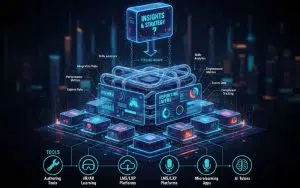
The 5-Layer Workforce Intelligence Architecture
Workforce analytics depend on architectural integrity. Failure at any layer weakens the system.
Data Inputs
Assessments, performance signals, and learning activities generate structured capability data. Without integration, data remains inconsistent.
Skills Ontology
A structured competency framework defines role expectations and skill relationships. Without ontology, talent modelling loses precision.
Capability Tracking Engine
Continuous monitoring captures skill evolution and capability volatility. Without tracking, organizations miss early warning signals.
Predictive Analytics Layer
Forecasting models simulate skill supply, succession probability, and workforce risk. Without prediction, planning stays reactive.
Executive Dashboard
Decision-ready intelligence links capability metrics to strategic initiatives and planning cycles. Without executive translation, workforce intelligence remains operational and underutilized.
Workforce planning analytics fail when any of these five layers disconnect.
Business Impact of AI-Driven Assessments: ROI, Succession, and Workforce Risk Visibility
Reduced External Hiring Costs
Many hiring decisions happen because leaders assume the capability does not exist internally. Workforce planning analytics can challenge that assumption. When internal skills become visible, recruitment is no longer the automatic answer.
Improved Succession Readiness Confidence
Talent modelling shifts succession from subjective debate to probability-based analysis. Leaders quantify readiness gaps and development timelines. This reduces executive transition risk and strengthens strategic continuity.
Faster Time-to-Role Proficiency
Skill gaps show up long before performance drops. Teams that connect skills mapping with learning analytics can respond earlier. That reduces ramp-up time and helps people contribute at full capacity sooner.
Workforce Risk and Skill Volatility Indicators
Workforce intelligence reveals capability concentration risk and emerging skill decay. Leaders can spot roles that carry higher risks. They can act early and adjust workforce planning before problems grow.
Governance and Implementation Challenges of AI-Driven Talent Intelligence
Predictive Accuracy vs Regulatory Explainability
Predictive models can improve workforce forecasting. Leaders still need to understand how those models make decisions. Rules around AI in employment continue to change across regions. Organizations must keep governance clear and stay aligned with compliance requirements.
Centralized Skills Ontology vs Business Unit Flexibility
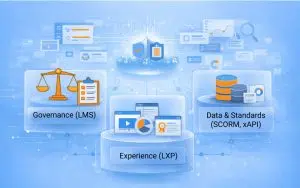
Standardization strengthens workforce intelligence and predictive consistency. Rigid frameworks can create new problems. They may not fit every team or business context. Governance needs balance. It should protect enterprise standards while still allowing local flexibility.
Continuous Monitoring vs Employee Trust
Predictive workforce planning works only when data flows consistently across systems. Leaders need clear rules for how they use that data and strong safeguards to protect trust.
Enterprise Implementation Blueprint
- Standardize the enterprise skills framework aligned with the strategy.
- Integrate LMS, HRIS, and performance systems into a unified architecture.
- Deploy adaptive AI-driven assessments connected to predictive analytics
- Align workforce intelligence outputs to executive dashboards
- Establish governance, audit, and model oversight processes.
Predictive workforce planning requires an operating model transformation. Technology deployment alone will not deliver results.
Frequently Asked Questions About AI-Driven Assessments and Talent Modelling
What is the difference between AI-driven assessments and traditional testing?
Traditional testing provides periodic evaluation scores. AI-driven assessments continuously analyze skill and performance data to generate predictive workforce intelligence that supports succession planning and workforce forecasting.
How does talent modelling support workforce planning?
Talent modelling connects skills data with forward-looking analysis. It gives leaders a clearer view of succession readiness, mobility potential, and upcoming capability pressure.
Can AI predict future skill gaps?
Yes, when it draws on consistent workforce data. AI connects learning activity, performance signals, and demand forecasts to identify areas where capability may not keep pace with business growth.
Are AI-driven assessments unbiased?
AI-driven assessments can reduce human bias. Organizations must design transparent algorithms. They must use reliable data and apply governance oversight to ensure fairness and compliance.
How does predictive workforce planning reduce hiring dependency?
Predictive workforce planning reveals internal capability early. It also highlights clear development pathways. Leaders can then redeploy and upskill training instead of turning to reactive external hiring.
Workforce intelligence only matters if it changes decisions. That is where we focus. At Mitr Learning and Media, we help enterprises move from isolated assessments to connected insight. If you are reviewing your current approach, we can explore what a stronger model looks like. Schedule your workforce planning consultation.