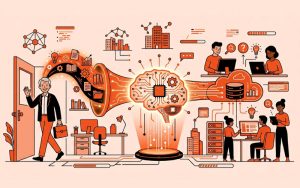

Your organization has years of documented process knowledge. Most of it is sitting in a folder, untouched. Here’s how AI changes that.
Most enterprise GenAI investment goes into chatbots and copilots. Almost none of it flows into training infrastructure, where AI can convert SOP libraries into structured, role-specific eLearning at scale.
If you’re an L&D leader or CLO, you already know this challenge. SOPs, compliance protocols, onboarding manuals, and product guides keep growing, while training backlogs continue to expand.
The business keeps changing faster than training teams can keep up.
This guide walks you through the real process of turning SOPs into scalable eLearning with AI. It covers the workflow, the decisions involved, and how teams are scaling training without adding more people or extending timelines.

Why the eLearning Backlog Keeps Growing and Why Traditional Tools Can't Fix It
The average enterprise eLearning course takes weeks to build from scratch. If you have hundreds of SOPs that need to become courses, that model doesn’t scale.
The result is what learning teams call “documentation debt”, institutional knowledge that exists on paper but never reaches employees as actual training. New hires learn through trial and error, while experienced workers carry process knowledge that never gets transferred.
Enterprises need systems that can process content in parallel, converting multiple SOPs into LMS-ready courses at scale.

What AI-Powered SOP Conversion Actually Does and What It Doesn't
Let’s be specific, because this is where a lot of vendor messaging gets vague. AI-powered SOP conversion is not about dumping a PDF into a tool and pressing a button. It’s a structured process that applies instructional design logic to existing content.
Here’s what the AI is actually doing when it converts an SOP into a course:
01
Content Analysis
The AI reads the SOP and identifies its structure, including purpose, scope, steps, conditions, and outcomes.
02
Learning Objective Mapping
Each procedural section becomes a learning objective. The AI determines what the learner needs to know, do, or avoid, and sequences the content accordingly.
03
Modular Structure Creation
Long SOPs are broken into appropriately sized modules. Each module covers one skill or process unit, making the content easier to consume in an LMS.
04
Assessment Generation
Quizzes and knowledge checks are generated from the SOP content, based on the actual steps and decisions in the procedure.
05
Format Output
The finished course is exported in SCORM, xAPI, or video format, ready to upload to your LMS with no additional production work required.

The Actual Process: From SOP to Deployed Course in Three Steps
Platforms like BrinX.ai follow a prepare, process, publish workflow. It sounds simple because the complexity is handled inside the AI layer. Here’s what each stage looks like in practice.
Step 1: Prepare: Organizing Your Content Before You Convert
This is the step most organizations underestimate. Not every SOP converts equally well. Before you upload anything, you need to prioritize your content based on four factors: business criticality, compliance relevance, how often the content is accessed, and how recent the information is.
- High risk, high frequency procedures should convert first
- Outdated SOPs should be reviewed before conversion, not after
- Define learning objectives for each SOP, even a one line description helps the AI structure the output
- Specify the target role or audience, the same SOP should read differently for a floor operator versus a supervisor
- Decide your output format, SCORM for LMS tracking, video for mobile first delivery, or both
You don’t need to prepare all 300 SOPs before you start. Batch by department or process area and convert as you go. The goal is a repeatable intake process, not a one-time project.
Step 2: Process: What Happens Inside the AI
Once content is uploaded, the AI analyzes it, applies instructional design logic, and generates the course structure. This is where BrinX.ai’s model differs from a generic AI writing tool. It doesn’t just summarize the SOP. It restructures it into a learning sequence with objectives, explanations, scenarios, and assessments aligned to what the learner actually needs to do on the job.
“The AI converts your documentation logic into learning logic. Those are different things, and that distinction is what separates a course from a PDF with a quiz at the end.”
During processing, the system also applies your brand standards and design templates, so every course that comes out looks consistent, not like it was built by fifty different people in fifty different weeks.
Step 3: Publish: Review, Refine, and Deploy
This is where your L&D team steps in, not to build the course, but to validate it. Review the generated content for accuracy, contextual nuance, and anything that needs local customization. This review cycle is far shorter than building from scratch because you’re checking output, not creating it.
Once approved, the course exports in your target format and goes straight into your LMS. SCORM and xAPI packages are standard, which means compatibility with Cornerstone, SAP SuccessFactors, Docebo, and most enterprise platforms isn’t a separate integration project.

Compliance and Traceability: Why Regulated Enterprises Need More Than Speed
If you’re in pharma, financial services, manufacturing, or any other regulated industry, speed alone isn’t the argument. Governance is. When an auditor asks which training module maps to which policy clause, you need a traceable answer, not a verbal explanation from your head of L&D.
AI powered conversion creates that traceability by design. Every module is generated from a source document, creating a direct link between training and policy content. When an SOP changes, teams can update affected modules instead of rebuilding the entire course.
Scroll right to read more.
| Scenario | Manual eLearning Build | AI Powered Conversion |
|---|---|---|
| SOP gets updated | Rebuild course from scratch or patch manually | AI identifies affected modules and updates only those sections |
| Audit requests content to policy traceability | Manual mapping exercise, often reconstructed | Structural link exists by default and is fully documentable |
| New regulation requires updates across 50 courses | Weeks of designer time across multiple projects | Source update, batch reprocessing, and deployment |
This matters most in regulated organizations where training inconsistency creates legal exposure. When the same SOP produces different training interpretations across departments, that’s not just a content problem. It’s a process problem. AI powered conversion solves this structurally.

Converting SOPs into Role Specific Learning Paths, Not Just Generic Courses
AI powered authoring can generate role specific learning paths from the same SOP.
For example, a warehouse safety SOP can be adapted for different audiences:
- Floor workers receive procedural steps and hazard recognition training
- Supervisors receive oversight responsibilities and escalation protocols
- Safety officers receive audit requirements and documentation standards
Same SOP. Different learning paths tailored to each role.
This is what turns SOP conversion into actual capability development, delivering the right content to the right people in the right context.

How to Scale Across Your Entire SOP Library Without Burning Out Your Team
The real business case for AI powered SOP conversion isn’t one course. It’s hundreds of courses converted and maintained at scale.
Build a Content Intake Process
Treat SOP conversion like a production line, not a project. Define your intake criteria, review workflow, and approval chain. When SOPs are created or updated, they should enter the conversion workflow automatically.
Set a Backlog Burn Rate Target
Decide how many courses you need to convert each month to reduce your backlog within a defined timeframe. AI processing allows multiple courses to be converted in parallel, dramatically increasing production capacity.
Retire Content as You Convert
Not every SOP deserves to become a course. Part of scaling is identifying outdated or low value content that should be archived instead of converted. AI tooling can help surface this by analyzing content age, usage frequency, and overlap.

Enterprise Security: What to Ask Before You Upload Your SOPs
Your SOPs contain proprietary process knowledge. Before uploading them to any AI system, you need clear answers on three things:
- How the data is encrypted during processing
- Whether content is retained after conversion
- Which compliance certifications the platform holds
BrinX.ai, for instance, operates with end to end encryption, zero data retention after processing, and SOC 2 Type II compliance. This means SOPs are processed but never stored, while the platform’s security posture is independently verified.
For enterprises subject to GDPR or sector specific data handling requirements, these are not optional features. They are baseline requirements for vendor selection.
Key Takeaways
- AI powered SOP conversion applies instructional design logic to create LMS ready courses
- The prepare, process, publish workflow keeps AI focused on production and L&D teams focused on governance
- Role specific learning paths make SOP based training more relevant and scalable
- Compliance traceability is built into the conversion structure, making it critical for regulated industries
- Enterprise grade security, including encryption, zero retention, and SOC 2 compliance, is essential
- The real ROI comes from a scalable conversion pipeline that keeps training updated without adding headcount

Conclusion: Your SOP Library Is Already a Training Library, It Just Hasn't Been Converted Yet
Your organization already has the process knowledge. What’s missing is a scalable way to turn that knowledge into training.
AI powered SOP conversion removes the production bottleneck that slows learning teams down. Instead of spending weeks building courses manually, instructional designers can focus on learning strategy, quality, and governance.
If your LMS backlog keeps growing, the issue is not content availability. It’s conversion capacity.

Frequently Asked Questions
Why is AI-powered SOP conversion better than manual course development?
AI-powered SOP conversion is faster and more scalable than building courses manually. Instead of creating each course from scratch, AI applies instructional design logic automatically and converts multiple SOPs into LMS-ready training simultaneously. This allows instructional designers to focus on review, governance, and learning quality instead of production work.
Which SOPs work best for AI-powered eLearning conversion?
SOPs with clear procedures, defined roles, and measurable outcomes convert best into eLearning. This includes safety procedures, compliance protocols, onboarding processes, and operational workflows. High level policy documents or conceptual frameworks may work better as performance support resources instead of full courses.
How is instructional quality maintained when AI builds the course?
AI powered course generation applies instructional design principles such as learning objective mapping, logical sequencing, and assessment creation. Human reviewers then validate accuracy, contextual relevance, and role specific adjustments before deployment.
Can AI convert SOPs from multiple departments at the same time?
Yes. AI powered conversion systems can process SOPs from multiple departments simultaneously. This helps enterprises scale course production while maintaining consistent structure, branding, and learning quality across teams.
What happens when an SOP gets updated?
When an SOP changes, the AI system updates only the affected learning modules instead of rebuilding the entire course. This makes training maintenance faster, more scalable, and easier to manage across large course libraries.