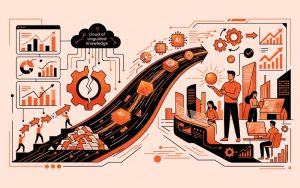

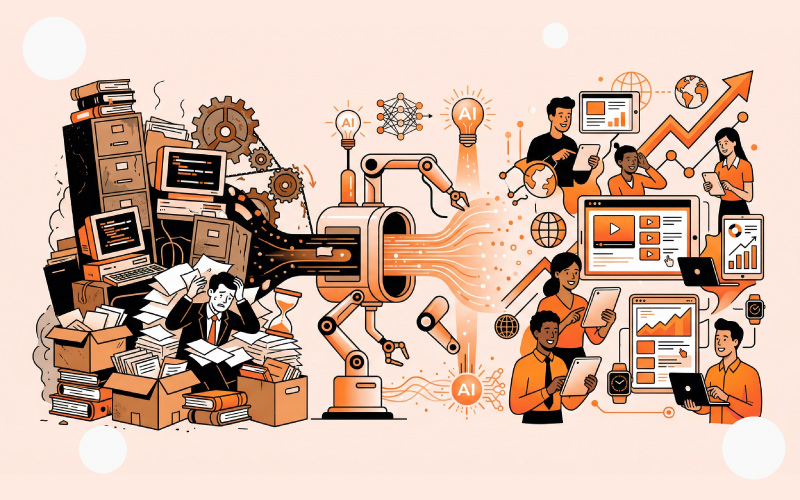
Most enterprise LMS platforms today are no longer effective learning systems. They have evolved into large, fragmented repositories of training content built over years of continuous addition and minimal retirement.
Despite ongoing investments, many organizations struggle to execute a scalable eLearning content modernization strategy at the enterprise level. Thousands of courses sit alongside outdated modules, duplicated materials, and static resources that no longer reflect current processes.
The challenge is not modernization alone; it is an accumulation.
Enterprise L&D teams are not struggling to modernize content. They are struggling to keep up with content debt across legacy eLearning content and LMS libraries.
What Is an Enterprise eLearning Content Modernization Strategy?
An enterprise eLearning content modernization strategy is a structured approach to updating, transforming, and managing learning content across the organization to ensure relevance, scalability, and alignment with business goals.
Unlike course-level updates, it focuses on:
- Managing large-scale LMS content backlogs
- Prioritizing high-impact training assets
- Transforming legacy eLearning content into scalable formats
- Establishing a continuous content lifecycle

The Content Debt Problem in Legacy eLearning Content
What Is Content Debt in Enterprise Learning
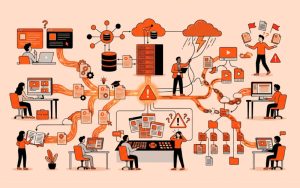
Content debt refers to the accumulation of outdated, redundant, and underutilized training assets across enterprise LMS environments and learning ecosystems.
This includes:
- Legacy eLearning content built in outdated formats
- Slide-based training converted without long-term updates
- SOPs and manuals not structured for learning
- Duplicate or overlapping training modules
How Content Debt Builds Across LMS Platforms
Content debt grows when organizations:
- Continuously add new training without retiring old content
- Maintain outdated courses due to compliance concerns
- Lack a centralized enterprise LMS content strategy
- AI-generated content with no content governance or lifecycle control
Over time, this leads to a growing LMS content backlog that becomes difficult to manage.
Business Impact of Outdated Training Content
Outdated training content creates measurable challenges:
- Increased compliance risk due to inaccurate information
- Slower onboarding and workforce productivity
- Hiring costs rise due to reactive workforce planning
- Over-reliance on SMEs for repeated updates
The larger the content ecosystem, the harder it becomes to maintain accuracy and relevance.

Why Enterprise eLearning Content Modernization Strategies Fail
The Scaling Problem in Legacy Course Modernization
Most organizations attempt to modernize legacy eLearning content one course at a time.
If a single course takes weeks to update, modernizing hundreds or thousands of courses becomes a multi-year effort. Meanwhile, new content continues to be added, increasing the backlog.
The Cost of Manual eLearning Content Modernization
Traditional approaches involve:
- Instructional design effort for each course
- Repeated SME involvement
- Multiple review cycles
This results in high cost per course and inefficient use of resources.
Throughput Limitations in LMS Content Transformation
The real constraint is not strategy. It is throughput.
Manual workflows cannot process large volumes of content fast enough to reduce the enterprise LMS content backlog.
Why Rebuilding Legacy Training Content Does Not Work
Rebuilding courses from scratch is often positioned as the ideal solution. In reality, it leads to:
- Budget overruns
- Incomplete transformation initiatives
- Delays in training rollout
Enterprise eLearning content modernization strategies fail because they are designed for individual courses, not for large-scale transformation.
Why Execution Breaks in Enterprise LMS Content Modernization
Internal L&D Teams Cannot Scale
Instructional design teams are not built to handle large-scale content transformation across hundreds or thousands of assets.
Vendors Operate in Project-Based Models
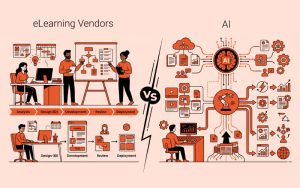
Most vendors deliver rapid eLearning solutions, but within fixed project scopes, limiting scalability.
Authoring Tools Do Not Solve Content Backlog
Authoring tools improve efficiency but still rely on manual workflows and do not reduce the overall content backlog.
The Core Limitation
If your eLearning content modernization strategy cannot process content in parallel at scale, it cannot solve the backlog.

The Shift: From eLearning Content Modernization to Content Transformation
To solve the backlog problem, organizations need to move beyond traditional modernization approaches.
What Changes in a Scalable Strategy
Scroll right to read more.
| Traditional eLearning Modernization | Scalable Content Strategy |
|---|---|
| Course-focused | Content-focused |
| Manual redesign | AI-assisted transformation |
| Sequential updates | Parallel processing |
| Static learning delivery | Continuous content flow |
Backlog Burn Rate: A Critical Enterprise Metric
A key success metric in any enterprise eLearning content modernization strategy is backlog burn rate.
This measures how quickly outdated or legacy content is transformed, updated, or retired.
- Low burn rate → backlog continues to grow
- High burn rate → content remains aligned with business needs

A Practical Framework to Reduce Content Debt
Enterprises need a structured approach to priorities and act on their content backlog.
1. Inventory the Entire Learning Content Ecosystem
Identify all learning assets across LMS platforms, shared drives, and offline repositories.
2. Prioritize Using a Business Impact Model
Evaluate content based on:
- Business criticality
- Compliance relevance
- Usage frequency
- Content freshness
3. Decide: Retain, Transform, or Retire
A strong eLearning content modernization strategy requires clear decisions:
- Retain relevant content
- Transform high-value legacy eLearning content
- Retire outdated or redundant courses
4. Transform Content at Scale
This is where most organizations struggle. Scaling transformation requires more than instructional design. It requires a system capable of processing high volumes efficiently.

AI-Powered eLearning Content Transformation at Enterprise Scale
To overcome these limitations, organizations need a scalable approach to modernizing legacy eLearning content.
AI-powered transformation enables enterprises to convert existing materials into structured, LMS-ready courses efficiently.
The Content-to-Course Transformation Pipeline
A scalable model includes:
- Ingest existing content such as PDFs, PPTs, SOPs, and manuals
- Structure content into learning modules
- Enrich with assessments and interactivity
- Validate with instructional design standards
- Deploy as LMS-ready content
Speed and Scale Advantage
Compared to manual approaches, AI-driven transformation enables:
- Faster conversion of legacy eLearning content
- Reduced turnaround time for compliance updates
- Scalable processing of large content volumes

Enabling Enterprise Content Transformation with BrinX.ai
A scalable enterprise eLearning content modernization strategy requires a system designed for transformation at scale.
BrinX.ai enables organizations to convert existing enterprise content into structured, deployable learning experiences efficiently.
What BrinX.ai Enables
- Transformation of legacy eLearning content into LMS-ready modules
- Processing of multiple content formats including documents and presentations
- Reduced dependency on SMEs for content creation
- Consistent learning output across business units
Where It Delivers Value
- Compliance training modernization
- Enterprise onboarding programs
- Product and process training
Business Impact
- Reduced LMS content backlog
- Lower cost per course transformation
- Faster rollout of training programs
- Improved consistency in enterprise learning

Addressing Common Enterprise Concerns
Will AI Reduce Content Quality
AI accelerates structuring and generation, while instructional design validation ensures alignment with learning objectives and standards.
Will SMEs Lose Control
SMEs shift from content creators to reviewers and validators, reducing their time commitment while maintaining control over accuracy.
Can This Scale Across Regions
Standardized transformation processes enable consistent output across geographies while allowing localization where needed.
What About Compliance Accuracy
Faster transformation cycles enable quicker updates, improving compliance readiness and reducing risk.
Enterprise content will continue to grow, making traditional approaches to modernization increasingly ineffective.
A scalable eLearning content modernization strategy must move beyond manual redesign and adopt systems that enable continuous content transformation.
The organizations that succeed are not the ones that create more training. They are the ones that can transform knowledge into learning quickly, consistently, and at scale.

Frequently Asked Questions on Enterprise eLearning Content Modernization
What is the fastest way to modernize legacy eLearning content at scale?
The fastest way to modernize legacy eLearning content is to use AI-powered content transformation as part of an enterprise eLearning content modernization strategy. This approach converts existing materials such as PPTs, SOPs, and documents into structured, LMS-ready learning quickly and at scale.
How do you prioritize content in an enterprise Learning content modernization strategy?
Content should be prioritized based on four factors: business criticality, compliance relevance, usage frequency, and content freshness. High-impact and high-risk training should be modernized first, while low-value content should be retired.
Is it better to rebuild or transform legacy eLearning content?
Transforming existing content is more scalable than rebuilding in an enterprise eLearning content modernization strategy. Rebuilding works for a few high-value courses, but transformation is more efficient when dealing with large LMS content backlogs.
How long does enterprise eLearning content modernization take?
The timeline depends on the approach and content volume. Manual methods can take months or years, while AI-powered eLearning content modernization strategies significantly reduce timelines by enabling parallel processing of large content volumes.
What is the biggest challenge in enterprise LMS content modernization?
The biggest challenge is scale. Most enterprise eLearning content modernization strategies fail because they rely on manual processes that cannot handle large LMS content backlogs efficiently.
Take the Next Step
If your organization is dealing with large volumes of legacy content, slow rollout timelines, or increasing compliance pressure, the starting point is not redesign.
It is understanding how quickly your existing content can be transformed into deployable learning.
Explore how BrinX.ai enables enterprise content transformation at scale and evaluate what your backlog reduction could look like in practice. Talk to our AI experts.