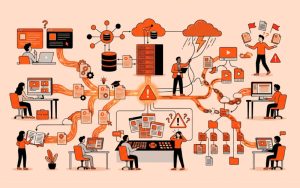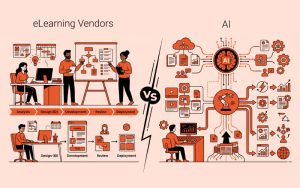

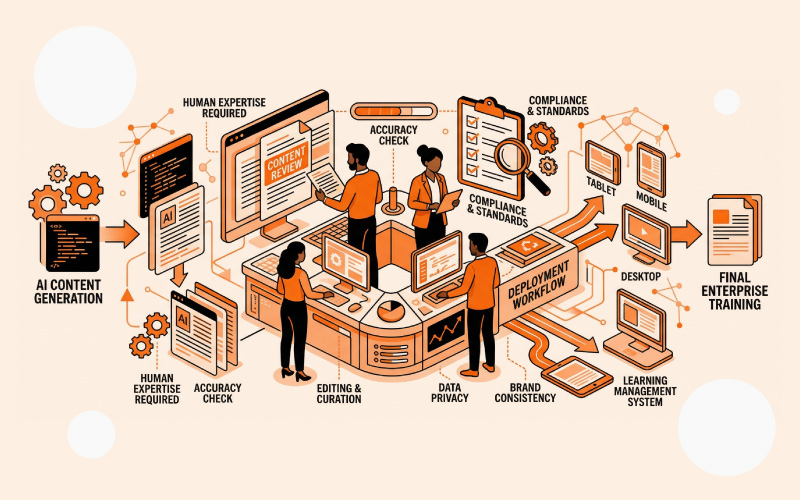
In one large enterprise setup, five L&D teams were using AI tools to create training content at the same time. Within a month, they had hundreds of modules ready in draft form. Output was no longer a concern. The numbers looked strong in reporting reviews.
But when leadership checked how much of that content actually reached learners, the picture changed.
Only a small portion made it through.
The issue was not effort. It was not even content quality in most cases. The drafts were usable, structured, and aligned to the brief. The slowdown happened after creation, once content entered the system.
Reviews are stretched. Edits overlapped. Approvals did not move at the same pace as generation.
So, the work was done, but not usable yet.
This is where the shift becomes clear. AI course creation has removed one constraint. What remains is everything that happens after, and that part was never built for this level of speed.
As more teams reach this stage, they start noticing the same pattern. Creation is no longer a problem. Movement is.
That leads to the next layer, where delays begin to take shape.

Why Validation and Approval Cycles Slow Down as Content Volume Increases
Once content starts moving in larger volumes, validation does not break immediately. It stretches first. Small delays appear, then they begin to stack.
Different reviewers come in with different goals. SMEs check accuracy. Compliance teams look at policy alignment. L&D teams try to keep timelines on track. These layers were always there, but they worked when content volume was lower.
Now they overlap.
In one financial services team, AI reduced draft creation time from weeks to a few days. That part worked. But the approval timelines increased. Not because people slowed down, but because more content entered the review at the same time.
At a working level, a few patterns start showing up:
- Review queues grow, even when more reviewers are added
- Feedback comes in across different versions of the same content
- Approvals move forward without full clarity, just to avoid delays
The system does not stop. It just becomes harder to manage.
And once multiple versions of the same content begin moving through these layers, the problem shifts again. It is no longer just about time. It becomes alignment.
That is where the next issue starts to show up more clearly.

What Causes Version Conflicts Across Teams and Regions
As content starts moving across teams, the issue is not always visible right away. At first, everything still looked aligned. Teams are working on the same topics, using similar inputs, and following the same timelines.
But the way content gets updated begins to change.
One team makes a change based on a local requirement. Other updates the same module for a different reason. Both changes are valid, but they are not connected. There is no shared point where these updates come together.
Over time, this creates small gaps. Not large enough to stop the process, but enough to create confusion later.
In one case, a global team found that two regions had approved different versions of the same compliance module. Both versions had gone through review. Both were correct in their own context. But they did not match.
That is where the problem starts to shift. It is no longer about how fast content is created or reviewed. It becomes about how updates are tracked and how versions stay aligned.
Because once multiple versions begin to exist at the same time, even simple questions become harder to answer.
- Which version is current.
- Which one is approved.
- Which one is being used.
And that is where the disconnect becomes more visible.
When Teams Stay Aligned, but Content Does Not
Version conflicts rarely begin as mistakes. Most of the time, they come from valid updates happening at the same time.
A regional team adjusts content for local policy. Another team updates the same module for a product change. Both changes are correct. But they are not connected.
In one global retail company, onboarding content was adapted across multiple regions. Each team worked with the same base material. Over time, small differences started to be built. Not enough to notice immediately, but enough to create confusion later.
People started asking basic questions. Which version is current. Which one is approved. Which one is live.
The system does not always have a clear answer.
Some teams store content in different locations. Others rely on shared files or internal messages to track changes. Over time, older versions resurface because they are easier to access than the latest ones.
The issue is not duplication alone.
Outdated or slightly incorrect content starts reaching learners. In regulated environments, that becomes a risk, especially in environments where compliance training automation must keep pace with continuous regulatory change.
At this point, the problem is no longer about speed or volume. It becomes about control.
And control cannot be added after things break. It needs to exist in how content moves from the start.
That leads to a more structured approach.
Why Enterprise Learning Needs a Structured Content Transformation Pipeline
Once content begins to move across teams, regions, and review layers, it cannot stay unstructured. It needs a defined path.
Some teams try adding more review steps. Others introduce tracking tools. These help for a while, but the core issue remains.
The issue is how content moves, not just how it is created.
A content transformation pipeline changes this by defining how content flows from draft to deployment, and how each stage connects.
In one enterprise setup, introducing a structured pipeline reduced rework cycles. Not because the content improved, but because teams stopped working on disconnected versions.
The shift is subtle at first.
Drafts are treated as inputs, not final outputs. Validated content is separated clearly. Approved versions are linked instead of copied.
This is where BrinX.ai fits in.
BrinX.ai is designed to manage how content moves after creation. It connects drafts, reviews, compliance checks, and deployment into one system.
Instead of teams managing each step separately, the system holds the flow together. Changes reflect across stages. Versions stay aligned.
Over time, this reduces friction that usually appears later in the process.
And once that structure is in place, governance becomes easier to apply without slowing things down.

How Governance and Automation Support Deployment Readiness
When content flows through a structured system, governance no longer sits at the end. It becomes part of the process itself.
This changes how teams experience control. Instead of checking everything at the final stage, validation happens along the way.
In one technology company, governance checks were built into each stage of content movement. Over time, fewer issues reached final approval.
Some shifts become noticeable:
- Teams can see exactly where content stands at any point
- Approval status does not depend on manual follow-ups
- Compliance checks happen earlier in the process
- Updates reflect across related content without repeated effort
Automation supports this, but only when the structure already exists. Without that, automation only speeds up the same problems.
With structure in place, it starts to reduce effort in a way that holds over time.
AI has already changed how fast content can be created. That part is no longer uncertain.
What continues to shape enterprise learning now is how that content moves, stays aligned, and reaches learners without breaking along the way.
BrinX.ai is built to address this exact gap. It works at the system level, where most of these issues begin. Instead of focusing on creating more content, it focuses on how content flows across stages.
How do versions stay connected.
How updates reflect across all dependent assets.
It brings structure to what is usually managed through scattered tools and manual tracking. Review cycles, compliance checks, and deployment readiness are not handled as separate steps. They become part of a connected process.
This reduces delays that come from rework, misalignment, and version confusion. Especially in large, distributed teams where these issues tend to grow quietly.
Over time, this creates a more stable way to manage growing content volume without adding complexity.
It shifts effort away from fixing issues later and toward maintaining alignment from the start.
Contact BrinX.ai to streamline your enterprise learning workflows and bring structure to AI-driven content at scale.