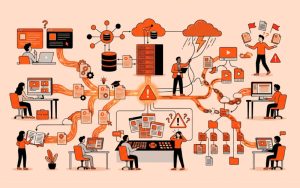

A compliance audit at a big-sized European bank revealed an unexpected issue. Employees had completed their mandatory regulatory training. Completion reports looked strong, above ninety percent across several departments. Yet during the audit review, two modules referenced regulatory guidance that had already been revised earlier that year.
The policy documentation has been updated. Internal compliance memos reflected the change. The training module still carried the earlier interpretation.
Incidents like this rarely appear dramatic. They happen quietly, usually months after a regulation evolves. By the time someone notices, the organization has already delivered outdated compliance guidance to hundreds or thousands of employees.
Across regulated industries such as financial services, pharmaceuticals, and advanced manufacturing, the real risk in compliance training is not weak in instructional design. The deeper issue is that learning systems tend to update more slowly than the regulatory environment surrounding them.
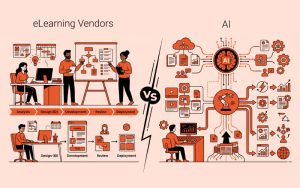
Generative AI has recently accelerated the ability to produce training content. Draft modules, policy summaries, and assessment questions can appear within minutes. Yet the operational machinery that governs enterprise compliance training still moves at its traditional pace. Validation cycles, SME reviews, and regional policy alignment introduce friction.
The gap between rapid content generation and slower enterprise deployment is now shaping how compliance training programs evolve.

How Regulatory Training Updates Gradually Reshape Enterprise Learning Systems
In regulated sectors, change rarely arrives in a single sweeping directive. Instead, organizations receive a series of clarifications, revisions, and interpretive notes over time. A financial regulator may adjust reporting guidance several times a year. Pharmaceutical regulators might revise labeling language after new clinical findings emerge. Manufacturing safety standards often evolve regionally as inspection findings accumulate.
Inside large organizations, these adjustments move through different operational channels. Policy teams revise documentation first. Compliance departments interpret the implications. Training teams usually encounter updates later, once operational guidance stabilizes.
A few recurring patterns appear when regulatory training updates intersect with enterprise learning systems.
- Compliance teams distribute policy updates internally while existing training modules remain unchanged for several months.
- Regional offices interpret the same regulation differently, leading to small variations in training materials across geographies.
- Internal audit teams later discover that employees completed training aligned with earlier regulatory interpretations.
None of these situations occur because teams are ignoring regulatory change. They reflect the complexity of translating policy adjustments into training updates across large learning ecosystems.
When generative AI entered the picture, many organizations expected the training update cycle to accelerate automatically. Draft content now appears quickly. Yet the operational system around compliance learning still requires careful validation and approval.
That is where the next layer of friction appears.

Why Generative AI Accelerates Compliance Content Creation but Deployment Still Slows Down
The emergence of generative AI tools has clearly changed how compliance training content begins its life cycle. A regulatory bulletin can now be converted into a structured training outline quickly. Scenario-based questions can be drafted automatically. Even policy explanations can be summarized with reasonable accuracy.
However, enterprise compliance learning rarely moves directly from draft to deployment.
Consider the typical workflow inside a global financial institution. A regulatory update arrives through legal or compliance channels. Someone on the learning team produces a draft training update, sometimes using AI tools to accelerate the process. The content then enters a validation sequence.
A simplified view of that workflow often includes several stages.
- Subject matter experts review the regulatory interpretation
- Compliance governance teams confirm policy alignment
- Regional leaders assess whether jurisdictional differences require localized adjustments
- Learning administrators prepare the final version for LMS distribution
The time spent in these steps rarely decreases simply because the initial content draft appeared faster.
In practice, generative AI compresses the beginning of the process while the rest of the system remains unchanged. Content arrives quickly, but organizational approval cycles still determine when training actually reaches employees.
As these validation stages extend across multiple regions and departments, another operational challenge gradually emerges. Training modules begin to diverge across systems.
That divergence leads directly to a problem many learning leaders recognize but rarely discuss it openly.

Why Version Control in eLearning Becomes a Quiet Governance Problem
Version control in eLearning often appears invisible until an audit forces closer examination. Training programs continue to run. Employees complete modules. Learning dashboards show healthy completion statistics.
The underlying complication surfaces gradually as organizations adapt training to different regulatory contexts.
In many enterprises, the same compliance module begins its life as a global template. Regional compliance teams then adapt that template to reflect local regulatory expectations. Over time, additional edits accumulate. Policy clarifications appear. Minor wording adjustments are introduced. Sometimes a regional compliance officer adds an example relevant to local regulations.
None of these modifications are problematic on their own. The issue appears when multiple variations of the same module begin circulating simultaneously.
A compliance leader reviewing the situation might find something like the following:
- A global baseline course maintained by the corporate compliance office
- Regional versions customized for European and Asian regulatory environments
- Archived modules that still exist in LMS catalogs because removing them disrupts reporting history
- Small wording differences across modules that reflect different interpretations of the same regulation
This is where version control in eLearning becomes more than a technical matter. It becomes a governance concern.
When regulatory training updates continue arriving, maintaining alignment across these variations becomes increasingly difficult. Teams often resort to rebuilding modules repeatedly in an attempt to maintain consistency.
That approach works temporarily. Over time, it becomes operationally exhausting.

Why Manual Compliance Training Rebuilds Slow Organizational Response to Regulation
In many organizations, regulatory updates still trigger a familiar operational response. The training module is opened by an instructional designer, revised manually, reviewed by subject matter experts, translated if necessary, and finally republished inside the LMS.
This workflow has existed for years and works well when regulatory change occurs occasionally.
The difficulty emerges when updates arrive repeatedly within short timeframes. Teams begin repeating the same operational cycle again and again. Designers revise the module. SMEs validate language. Regional reviewers adjust to examples. Administrators push the update live.
At that point several practical tasks start consuming disproportionate effort.
- Repeated SME validation meetings for small regulatory clarifications
- Manual cross-checking to ensure regional modules reflect the latest policy language
- Rebuilding course packages so LMS systems recognize the new version
Organizations experimenting with compliance training automation often reach this stage first. They realize the issue is not simply writing content faster. The deeper challenge lies in how compliance training content is structured and updated.
BrinX.ai approaches the problem by converting compliance modules into structured learning components. When regulatory training updates appear, only the relevant component changes rather than the entire course being rebuilt.
This architectural shift introduces the possibility of maintaining scalable compliance content across complex regulatory environments.
How Structured Content Pipelines Enable Scalable Compliance Content
Structured learning architectures are gradually gaining attention among enterprise learning leaders. Instead of treating training modules as single static documents, organizations begin managing them as collections of smaller learning objects.
The implications become clear once a regulatory change occurs.
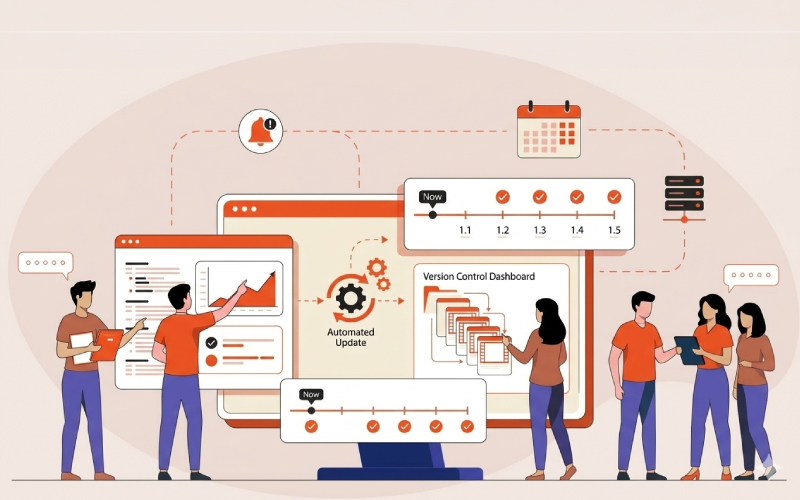
For instance, if a regulation alters how risk scenarios should be interpreted, only the relevant learning component requires revision. The rest of the training module remains intact. That approach reduces the need for full course rebuilding.
Structured workflows also introduce several operational advantages.
- Regulatory updates can be mapped directly to specific learning components
- Version histories remain visible for audit purposes
- Regional variations can be managed without duplicating entire courses
BrinX.ai are increasingly designed around this model. The objective is not simply faster content generation but a controlled pipeline where regulatory training updates flow into the learning system with minimal disruption.
For organizations operating across multiple jurisdictions, this approach makes scalable compliance content more realistic. Training programs become easier to maintain even when regulatory environments evolve frequently.
Once this infrastructure exists, the conversation around compliance learning changes. Instead of asking how quickly a training module can be rewritten, leaders begin examining how regulatory change travels through the learning ecosystem.
That perspective leads directly to the final operational concern many compliance teams face.

How Compliance Training Automation Reduces Hidden Audit Exposure
Audit findings rarely focus on whether compliance training exists. The deeper concern is whether the training reflects current regulatory expectations.
When version drift occurs across learning systems, several subtle risks begin appearing.
- Employees completing outdated compliance modules that still exist in the LMS catalog
- Regional offices distributing slightly different interpretations of the same regulation
- Audit teams struggling to determine which training version was active during a given reporting period
- Policy updates reaching documentation repositories months before training modules are revised
Compliance training automation aims to reduce these inconsistencies by linking regulatory monitoring systems directly with learning content infrastructure. When regulatory training updates appear, affected learning components can be flagged automatically for review.
Subject matter experts still validate the interpretation. Governance processes remain intact. The difference lies in how quickly the system identifies where training content requires adjustment.
Over time, this approach improves version control in eLearning environments and reduces the operational friction surrounding regulatory updates.
Generative AI may continue accelerating content creation. Yet the larger shift in enterprise compliance learning appears when organizations combine AI-driven drafting with structured content pipelines and scalable compliance content systems.
Only then does the training infrastructure begin matching the pace at which regulatory environments evolve.
Organizations exploring this shift often begin by rethinking how regulatory knowledge moves through their learning systems.
BrinX.ai helps enterprises design automated compliance learning pipelines, enabling faster regulatory training updates, stronger version control in eLearning, and scalable compliance content across global operations.
If your compliance training programs are facing similar updates and governance challenges, contact BrinX.ai team to explore how compliance training automation can support your organization’s regulatory readiness.