
Clinical updates move through healthcare systems in a way that feels routine enough to overlook.
A protocol revision is approved, logged, and shared through familiar channels, often alongside several other changes that arrived in the same week. Work on the floor usually continues unchanged, because schedules, staffing, and training plans were set earlier.
Most organizations operate comfortably in this in-between state, where updates are known, mentioned in huddles or side conversations, and expected to show up formally later.
Older references stay in place because removing them too quickly creates uncertainty.
This blog examines how that gap forms, why it persists as clinical guidance changes more frequently, and how training systems absorb or fail to absorb those changes.
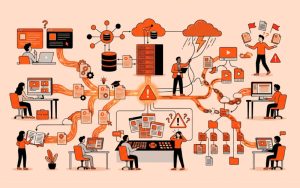
Clinical change usually travels through a predictable path, from updated guidance into SOP revisions, from SOP language into training material, and then into frontline practice, where it either lands cleanly or drifts. BrinX.ai fits inside that path by keeping the links visible, so changes do not lose their meaning as they move from documents into training and then into work.

How Frequently Changing Clinical Guidelines Disrupt Training Cycles
Clinical guidance now changes often enough that most healthcare organizations no longer treat updates as discrete events. Recommendations arrive from multiple sources, sometimes close together, and they rarely align with internal training schedules that were designed years ago. The pace itself is not a problem. What matters is that most learning systems still assume change will be occasional, contained, and easy to slot into an existing cycle, an assumption that increasingly requires AI-enabled visibility to hold.
Where Approval and Adoption Begin to Separate
Approval usually moves through familiar steps, with reviews completed, documentation updated, and changes logged where they are supposed to live, but what follows is less consistent, because teams continue working from prior training while revised materials take time to surface, especially when only one part of a larger workflow has shifted.
In one large hospital network, a revised medication protocol was circulated within days, yet units applied it differently for weeks because the associated training update had not reached the floor.
Over time, this gap becomes routine. Training does not replace what came before as cleanly as it once did, and updates start to layer instead. Guidelines accumulate; references multiply, and clarity gradually erodes.
That accumulation does not stay confined to policy documents. It moves inward, shaping how SOPs begin to behave.
Why SOP Accumulation Becomes a Learning Problem Over Time
Once guideline updates move inside the organization, they tend to settle into SOPs rather than resolve them. Each change is documented correctly, but it is usually added to what already exists, because removing or rewriting older instructions takes time, approvals, and coordination that rarely line up.
Over months, sometimes years, SOPs begin to represent layers of decisions rather than a single, current way of working.
This is where training teams start to feel friction that is hard to name. Courses are built against SOPs that no longer read cleanly, and learners are asked to navigate references that point in slightly different directions. In one system, two SOPs describing the same intake process differed only in a few steps, yet both remained active because each had been updated at a different time.
Training reflected both, without clarifying which applied when.
BrinX.ai looks at this point in the lifecycle, where SOPs have accumulated enough history that it is no longer clear how one update relates to another. The focus is not on producing additional material, but on understanding where versions diverge and which parts of a process have actually changed.
BrinX.ai provides an AI-enabled structural layer that keeps changes visible as they move from clinical guidance into SOPs, training, and practice.
When that structure is missing, accumulation continues without resistance, and what starts as documentation drifts later surfaces as retraining complexity, with longer cycles and less certainty about what is current.

Staff Retraining Cycles Were Built for Stability That No Longer Exists
Retraining cycles begin to strain once SOPs stop behaving like stable reference points. Most enterprise programs still operate on fixed rhythms, annual refreshers, scheduled recertifications, and updates aligned to compliance windows that assume procedures change occasionally and in full.
That structure holds when updates replace what came before. It holds less well when change arrives in fragments and touches only parts of a longer task.
When Cadence No Longer Matches Change
In many systems, retraining continues to run on schedule even as the underlying material shifts between cycles. A small procedural change can sit inside a larger course for a long time without anything around it shifting. Until that course is touched again, people work from what they remember, filling gaps through quick conversations or local habits, because the training environment itself gives no clear signal that anything has materially changed.
When Completion Stops Reflecting Readiness
Over time, retraining starts to look complete on paper while feeling incomplete in practice. Sign-offs are recorded, and requirements are met, yet the application varies across teams. In one multi-site organization, a short add-on module was issued for a revised process while the core course stayed intact, leaving learners to reconcile differences on the job rather than through structured training.
BrinX.ai tends to appear at this stage when teams try to understand why retraining feels heavier without becoming clearer. Making it visible which parts of a process actually changed, and which did not, retraining narrows to what needs attention instead of spreading across everything. The issue is rarely volume alone. Retraining cycles still assume a clean reset, while the material beneath them has evolved into pieces.
In one instance, a clinical protocol was adjusted to reflect updated screening guidance, which led to a small SOP revision and a short training add-on rather than a full course update. The update was technically complete, but retraining reached different teams at different times, and some roles never saw the change in context. When questions surfaced later, training records showed completion, while practice reflected a mix of old and new steps. The issue was not compliance, but the absence of a clear line between what changed and what had not.
As that gap widens, schedules stretch, exceptions increase, and confidence in what retraining actually represents begins to thin, pushing the issue beyond learning design and toward operational risk.
Where Patient Safety Risk Quietly Enters the System
Patient safety risk rarely announces itself at the point where something changes. It tends to take shape later, after training, documentation, and daily practice have shifted just enough to stop reinforcing one another, even though nothing appears broken in isolation.
- In many organizations, this becomes noticeable during routine reviews rather than incidents, when straightforward questions start producing slightly different answers depending on who is asked and which version of training they recall.
- The process being described usually sounds familiar, yet the details vary, shaped by when an update reached a team and how it was interpreted alongside existing practice.
- Near-miss reports often reference steps that feel almost right, close enough to pass without attention most of the time, which makes them easy to dismiss as situational rather than structural.
- These differences rarely point back to skipped communication, but to updates settling unevenly across roles, shifts, or locations, influenced by timing more than intent.
- During handoffs, the variation becomes easier to hear, as the same task is described using different language drawn from older SOPs, partial retraining, or informal clarification.
- Learning systems usually still look complete at this stage, with requirements marked as finished and records intact, even though completion reflects attendance and acknowledgment more than how updated guidance was absorbed.
- The risk remains diffused because nothing fails loudly, and alignment erodes quietly, step by step, until someone pauses long enough to compare what is written, what is taught, and what is actually done.

Why Faster Content Creation Does Not Solve the Real Problem
Once patient safety risk becomes visible, the response often turns toward speed. Teams focus on updating content faster, rebuilding courses sooner, and tightening delivery timelines. That instinct makes sense, but it tends to focus on output rather than structure. Producing content more quickly does little if the underlying system still treats every update as a full replacement instead of a partial change.
In many organizations, small updates still create extra rework because content cannot clearly show what changed and what stayed the same. Teams often wait until revisions pile up enough to reopen a course, which turns speed into something selective instead of ongoing. When updates move faster, they tend to spread unevenly, with teams adjusting materials at different times, leaving learners to piece gaps across modules, job aids, and SOP references.
BrinX.ai usually enters at this point, when teams start separating content structure from content production, mapping changes at the level of steps and decisions rather than entire courses. Without that shift, faster creation increases volume without restoring clarity, and the lag that prompted the effort remains.
The work of keeping training aligned with clinical change never really settles. Guidance continues to shift; documentation continues to layer, and learning systems continue to operate inside constraints that were set for a slower pace. Over time, organizations adjust around this rather than resolving it, relying on local clarification, informal reinforcement, and experience to fill gaps that formal training cannot close quickly enough.
What matters is not reaching a point where training feels fully caught up, since that point does not remain for long. What matters is how visible the gap stays, how deliberately it is handled, and how clearly change moves from approval into practice. When that visibility improves, learning stops feeling stuck behind and begins functioning as part of the system rather than a step that follows it.
For organizations reviewing how clinical updates move from approval into training and practice, BrinX.ai provides a structured way to examine visibility, alignment, and retraining clarity across that lifecycle.
Turning learning content into governed assessment systems
Teams deploy updates with greater confidence because alignment occurs automatically. This shortens time to deployment and reduces hesitation tied to downstream fixes.
Frequently Asked Questions
In this context, systems like BrinX.ai tend to operate quietly in the background. By applying AI-driven instructional design to existing documents, BrinX.ai supports earlier structuring without stepping into authoring or instructional judgment, allowing teams to see relationships, gaps, and dependencies sooner and reduce the repeated reconciliation that often slows early phases of work.
Will I lose my content rights if I use an AI tool?
It depends on the tool. Some platforms lock your content inside their system. A better option is a platform like BrinX.ai that lets you export SCORM files. You own those files completely. You can upload them to any LMS and access them even if you stop using the tool.
Does AI-generated training follow accessibility rules?
Yes. AI helps improve accessibility in eLearning. It can add image descriptions and create captions for videos or flag color contrast issues that make content hard to read. Using AI makes it easier to meet WCAG accessibility standards when you manage a large number of courses.
How do you use AI to measure the ROI of training programs?
AI connects learning data with on-the-job performance. It shows which parts of a course help people perform better and which parts slow them down. This gives learning teams clear data to share with leadership. Instead of assumptions, you can show how training supports real business outcomes.
How much can I save by using AI-supported course development?
Many teams reduce development costs by 50% to 70%. Traditional course creation takes a lot of time because teams plan, structure, and format everything manually. AI handles much of this early work quickly. As a result, teams create more training without increasing their budget.
How do I pick the right AI tool for my organization?
Focus on three things: workflow fit, export options, and security. The tool should work with your existing process and allow exports in formats like SCORM. Security matters most. Choose a platform built for learning teams, like BrinX.ai, that keeps your data private and does not share it with public AI models.

Soft Skills Deserve a Smarter Solution
Soft skills training is more than simply information. It is about influencing how individuals think, feel, and act at work, with coworkers, clients, and leaders. That requires intention, nuance, and trust.