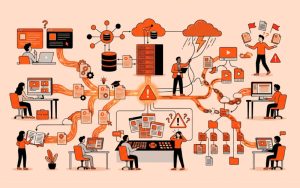


Across several regulated sectors, update intervals have tightened in ways that become more noticeable when viewed across multiple cycles. Agencies that once issued annual revisions now release smaller adjustments throughout the year. Safety board’s introduce mid-cycle clarifications. Data authorities publish interpretive notes more frequently.
None of these shifts is dramatic on its own, but the increase in frequency changes how organizations experience compliance work because every update creates a new operational checkpoint.
As the cadence increases, teams begin seeing the delays that sit inside their workflows. A revision that once aligned with a quarterly window now overlaps with other mandatory tasks. The pattern reveals that the sequence of reviews, approvals, and repackaging was built for slower regulatory movement, not continuous adjustment.
This observation leads naturally to the next question. If regulatory activity continues accelerating into 2026, manual updating will strain under the volume and timing of revisions.

Why Manual Updating Becomes Unsustainable Under Faster Cycles
Most organizations still rely on a largely manual workflow for compliance updates. A policy amendment moves from the regulatory group to L&D, then to legal reviewers, then back through validation before the updated module is released. Each stage involves documentation, commentary, or version tracking. When cycles were predictable, this structure functioned well enough. As the pace increases, the sequence exposes delays that used to be absorbed quietly.
Many of these delays follow recurring patterns that appear across industries. They do not reflect poor management. They reflect the inherent limitations of a process that depends on human coordination at every handoff. These patterns often include:
-
Multiple versions of the same material are circulating across teams
-
Extended review loops involving legal, compliance, audit, and regional leaders
-
Formatting differences between authoring tools and the LMS environment
-
Varying interpretation of which changes require full revision versus minor adjustment
-
Disconnected tracking methods for documenting what changed and why
-
Repackaging rules that differ by course type or technical format
When these conditions overlap, the manual method slows down even for small updates. A minor regulatory clarification can trigger a sequence of tasks that take far longer than the content itself would justify. This becomes more visible when regulators issue several clarifications within a short period. Teams find themselves repeatedly revising the same assets without enough time to stabilize them.
As regulatory cycles compress in 2026, the need to reduce cumulative delay becomes more pressing. Organizations may notice that their internal timing no longer aligns with external requirements, which introduces avoidable risk.
This tension makes it necessary to examine the systems supporting compliance processes, because the systems often determine how quickly a change can move from interpretation to delivery.

Systems Not Designed for Rapid Change Create Operational Lag
Technology used to build and distribute compliance training was originally developed for stability. LMS platforms, authoring environments, and content management tools were engineered around structured releases rather than continuous updates. When regulators move slowly, this design fits the operational landscape.
As the pace increases, the architecture reveals points of friction that cannot be resolved simply by adding more personnel.
Many organizations operate in mixed environments where newer tools coexist with legacy systems. The mixture works, but it introduces latency because each system handles versioning, packaging, and tracking differently. A single update can move through three or four tools before it reaches learners.
Each tool adds rules that must be followed strictly, and even minor inconsistencies force teams to restart parts of the workflow.
Consider a common scenario.
A regulatory clarification modifies a line of policy language. L&D incorporates the change into the master version of a module. The content must then be exported from the authoring tool, validated for tracking behavior, reviewed by legal stakeholders, and tested in the LMS environment.
If the organization manages more than one LMS, these steps repeat adjustments for technical differences. Even when teams coordinate well, the process slows because the systems require precise formatting and compatibility checks.
These structural delays demonstrate why organizations cannot depend solely on human effort to match the pace of regulatory change. If the system inherently restricts speed, teams can only work within its boundaries.
This realization prompts a shift in focus toward understanding which training components require rapid updating and which remain stable over longer periods. The distinction helps determine where automation can make the greatest impact.

Distinguishing Between Slow-Moving and High-Frequency Regulatory Elements
Regulatory content does not behave uniformly. Some frameworks update infrequently, while others produce amendments or interpretations several times a year. Training teams benefit from recognizing these patterns because it allows them to align their update strategy with the nature of the content rather than applying the same workflow to everything.
Organizations often classify regulatory elements that reflect their typical rate of change. These categories emerge naturally once teams track updates over several cycles. Common distinctions include:
-
Foundational mandates that remain stable and rarely require revision
-
Cyclical updates that adjust thresholds, definitions, or reporting requirements
-
High-frequency interpretive guidance that modifies how rules should be applied in practice
-
Regional or jurisdictional variations requiring separate module versions
-
Operational scenario updates that reflect shifts in real-world risk conditions
-
Supplemental clarifications that appear independently of the core regulation
Understanding these categories helps training teams allocate attention efficiently. They can plan structured review windows for slower-changing content and develop rapid-update pathways for areas subject to frequent modification.
Without this classification, teams risk treating every regulatory update as equivalent, which increases workload unnecessarily.
As organizations refine these distinctions, the operational challenge becomes clearer. It is not only about content accuracy. It is about the difficulty of distributing updated material across numerous systems without repeating technical work.
That recognition brings attention to the multi-LMS environments common in large enterprises, where the distribution process often becomes the most time-consuming part of compliance maintenance.

The Hidden Workload of Multi-LMS Compliance Distribution
Many enterprises maintain several LMS platforms due to regional requirements, legacy decisions, or structural differences across business units. This arrangement functions adequately until updates become frequent. When cycles accelerate, each LMS introduces its own series of steps, creating complexity that scales quickly.
The administrative work behind distribution is more extensive than it appears on the surface. A revised module must be packaged correctly, mapped to the appropriate tracking standard, tested for compatibility, and confirmed against the LMS’s publishing rules.
Some systems require new version identifiers. Others require a complete reupload even for minor edits. These rules may appear small individually, but together they form a workload that grows rapidly when updates occur often.
Teams also contend with platform-specific sensitivity.
A small formatting mismatch can cause assessment scoring to behave incorrectly in one LMS while functioning properly in another. When this occurs, the entire module usually needs to be validated again to ensure it performs consistently.
The combined steps create long validation cycles even when the underlying regulatory update was brief.
As regulatory pacing intensifies, organizations begin looking for structural approaches that reduce the burden created by multi-LMS distribution. This naturally leads to interest in automated systems capable of making updates once and distributing them everywhere without repeated rework.
The potential impact becomes clearer when examining how automation aligns with compliance workflows.

How BrinX.ai Supports Faster Compliance Updating Without Rework
BrinX.ai introduces a model that adapts to the increasing pace of regulatory change by automating the parts of the workflow that consume the most time. Instead of rebuilding an entire module after each update, the platform adjusts the affected components within the module structure.
This approach reduces the need to reformat, repackage, or manually test content across multiple LMS environments.
Once a regulatory update is processed, BrinX.ai distributes the revised module to every connected LMS in a format that aligns with each system’s technical requirements. Teams do not create separate package versions or conduct platform-by-platform adjustments. The system manages version control centrally, maintaining alignment across regions and business units.
The operational impact becomes clearer when reviewing the types of work the platform removes from the traditional workflow:
-
Rebuilding course packages after every amendment and preparing alternate versions
-
Revalidating SCORM, xAPI, or proprietary formats for different LMS environments
-
Adjusting visual layouts or structural components to satisfy system-specific requirements
-
Retesting assessments and tracking behavior for every distribution channel
-
Coordinating multiple upload and versioning steps across regions
-
Maintaining parallel audit trails for modules that differ only by technical format
Automation shifts the focus away from mechanical tasks and toward regulatory interpretation. Teams can respond more quickly because the system eliminates the technical bottlenecks that typically slow down compliance activity.
This shift encourages organizations to reconsider how their compliance and learning operations should function as cycles continue to accelerate. Preparing for 2026 becomes a matter of planning for higher regulatory frequency rather than incremental workload increases.

Preparing Learning and Compliance Teams for the 2026 Shift
Some organizations have begun adjusting their structures to prepare for a period in which regulatory updates may arrive more frequently. The goal is less about speed and more about reducing the friction that arises when multiple groups handle updates inconsistently.
Operational clarity becomes valuable in environments where training revisions must occur several times a year.
These adjustments often appear in practical areas where coordination gaps tend to form. They may include:
-
Assigning clear ownership for regulatory monitoring within each region
-
Creating a structured intake process for routing updates to L&D
-
Standardizing version-control practices across distributed teams
-
Simplifying approval chains for amendments that do not alter core policy
-
Maintaining unified audit logs that document update decisions in detail
-
Establishing predictable release windows for nonurgent training revisions
These measures help stabilize workflow even when external pacing changes. The intent is not to transform operations rapidly but to ensure they remain functional when updates become more frequent. Organizations that establish this clarity earlier tend to manage compressed cycles more effectively.
As regulatory expectations continue evolving, the ability to handle rapid updates without expanding resource load becomes an operational advantage. Solutions that streamline update propagation, such as BrinX.ai, support this direction by reducing the mechanical work required to keep training aligned with regulatory change.
The outcome is a steadier, more resilient compliance function that can adjust to the pace expected in 2026 and beyond.

FAQs
What is AI in eLearning?
AI in eLearning refers to the use of artificial intelligence tools and models to automate, personalize, and optimize instructional design and learning delivery.
How is AI transforming instructional design?
AI is reshaping instructional design by automating repetitive tasks, generating data-driven insights, and enabling adaptive learning paths so designers can focus on creativity and strategy.
Can AI replace instructional designers?
No. AI enhances instructional design by managing mechanical tasks, allowing designers to invest their time in creativity, empathy, and alignment with business goals.
What are the benefits of using AI in eLearning?
Key benefits include faster course creation, adaptive personalization, smarter assessments, better learner analytics, and continuous improvement through feedback loops.
How does BrinX.ai use AI for instructional design?
BrinX.ai automates course structure, pacing, and assessment logic using AI-driven design principles, while maintaining strong version control and governance.
What challenges come with AI in eLearning?
The main challenges include ethical oversight, data bias, intellectual property questions, and ensuring human judgment remains central in the design process.
What instructional design models work best with AI?
Models like ADDIE, SAM, and Gagne’s 9 Events integrate seamlessly with AI, turning static frameworks into dynamic, data-responsive design systems.
How can AI improve learner engagement?
AI supports adaptive content, predictive nudges, and personalized reinforcement, aligning with motivation models like ARCS and Self-Determination Theory.
Is AI-driven learning content ethical?
It can be, when guided by transparency, inclusivity, and diverse data sets, ensuring that algorithms serve learning rather than bias it.
What’s next for AI in instructional design?
Expect AI to drive conversational learning, generative storytelling, and predictive analytics that anticipate learner needs before they arise.

Soft Skills Deserve a Smarter Solution
Soft skills training is more than simply information. It is about influencing how individuals think, feel, and act at work, with coworkers, clients, and leaders. That requires intention, nuance, and trust.