
At Mitr Learning & Media, we’ve spent years watching enterprises expand their learning ecosystems. Every season brought a new tool. Every budget cycle brought a new platform. And for a while, it looked like this momentum would solve capability challenges on its own.
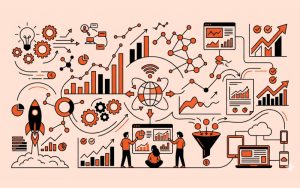
But here’s the honest truth we’ve seen across markets, clients, teams, and industries. The tools didn’t create clarity. Tools created load. What created clarity was something far quieter and far more powerful: insights.
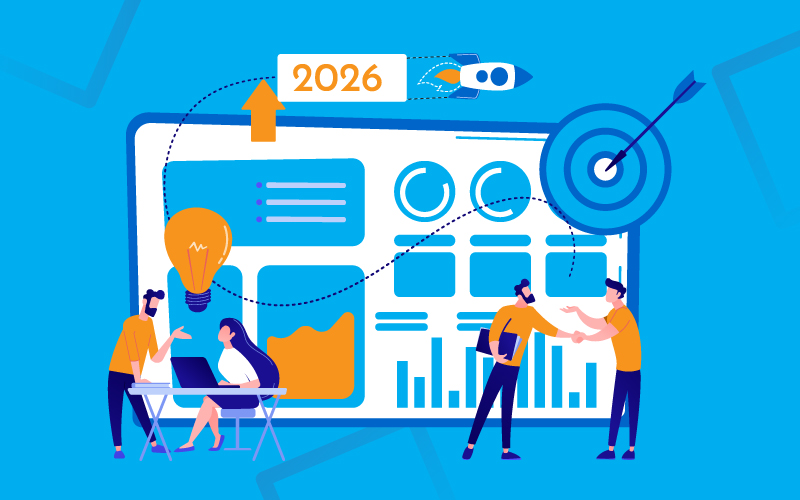
So, as we approach 2026, it’s time to talk about why enterprise learning strategies must shift away from tool accumulation and step toward insight-driven capability building. This shift isn’t theoretical. It’s already happening across high-performing organisations, and we’ve seen the change firsthand.
And if you’ve ever wondered why you’re learning stack feels heavier than helpful, you’ll see the story unfold here.

1. Enterprise Learning Strategies Need Insights Because Tools Alone No Longer Answer Real Questions
Let’s start with a familiar picture. An organization invests in an LXP, an analytics suite, a course library, a coaching app, an authoring tool, and maybe even an AI assistant. Stakeholders feel optimistic. Leaders feel modern. But three months later, a core question quietly surfaces.
What are we learning from all this?
We remember a conversation with a global firm that had implemented nine different learning systems. Nine. The CIO looked at us and said, “I have dashboards. What I don’t have is direction.” And that moment summed up the problem many enterprises face today. Activity isn’t insight. Usage isn’t impact. Volume isn’t value.
When insights lead, enterprise learning strategies finally start doing what they’re meant to do: improve capability, performance, and business outcomes. Without insights, even the best tools feel like furniture. Nice to have. Rarely used well.
And as the parent organization guiding Upside Learning’s expertise across industries, we’ve seen something consistent. Insights sharpen focus. Focus drives outcomes. Outcomes build credibility.

2. Tool Fatigue Is Real, and Insights Break the Pattern
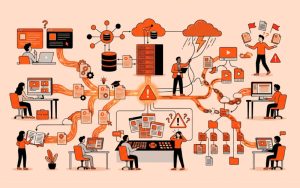
In many enterprises, tool fatigue has become the unintended side effect of digital learning ambition. New tools promise efficiency, but without insights, each one adds friction. Learning teams juggle logins, workflows, reports, integrations, permissions, and expectations. Somewhere along the way, the original purpose gets buried.
We once worked with a client who said their LMS had “become a museum for courses no one visits.” It was funny at first, but then the reality sank in. If learners aren’t engaging, if teams aren’t upskilling, if managers aren’t seeing change, then the tool doesn’t matter. What matters is understanding why.
Insights expose the real issues:
-
Irrelevant learning paths
-
Poor timing
-
Content overload
-
Outdated skill priorities
-
Misaligned goals
Once insights start guiding decisions, the entire ecosystem begins to breathe again. Tools simplify. Processes align. Learning becomes purposeful.
As Mitr Learning & Media, when our teams observe this shift inside client organisations, it’s almost always accompanied by relief. Not because the tools changed. But because the lens changed.

3. Insights Turn Skills Intelligence into a Strategic Advantage for Enterprises
Across every region we operate in, skills intelligence has become a critical priority. But here’s what we’ve learned working with enterprises of all sizes: skills intelligence doesn’t emerge from technology. It emerges from insights that make patterns visible.
A few years ago, a client believed their biggest skill gap was leadership capability. They invested heavily in leadership programs. The participation numbers looked impressive. The outcomes didn’t. When insights were finally introduced, the truth surfaced. Their real challenge was digital fluency in process-heavy roles.
Within six months of shifting their strategy, productivity rose, errors dropped, and collaboration increased. Not because of a new program. Because of new clarity.
Insights help enterprises answer questions like:
-
Which skills drive performance today?
-
Which skills will matter in 2026 and beyond?
-
Where are capability risks emerging?
-
Where should investments shift?
-
What must change immediately?
Enterprise learning strategies that rely on assumptions become expensive. Strategies built on insights become strategic.
And from a parent-company vantage point, we see this difference across client ecosystems every day. Insights don’t just support decision-making. They accelerate confidence.

4. Learning Culture Strengthens When Insights Shape the Experience
Many organizations chase a learning culture as if it’s a campaign. At Mitr Learning and Media, we’ve learned that culture forms when learning becomes meaningful, personalized, and relevant to people’s everyday reality. And nothing enables that better than insights.
Insights highlight where learners struggle.
Insights show what they value.
Insights reveal how they progress.
Insights uncover what truly engages them.
One of our retail clients had low compliance completion rates across frontline teams. Tools weren’t the issue. Content wasn’t the issue. Timing was the issue. Once insights revealed when employees actually had mental bandwidth to learn, completion rates surged.
Sometimes the difference between frustration and success is one simple insight. And that’s why enterprise learning strategies powered by insights build cultures where people feel supported, understood, and guided. Tools can deliver content. Only insights can create connection.

5. Insight-Led Decision Making Will Define High-Performing Enterprise Learning Strategies in 2026
The pace of organizational change is not slowing down. AI adoption, role shifts, market turbulence, and workforce expectations are reshaping how companies operate. Enterprise learning strategies that rely on tool stack expansions won’t keep up. Strategies that rely on insights will.
Here’s what insight-led L&D looks like:
-
Clear visibility on skill gaps
-
Capability planning aligned with business cycles
-
Learning interventions that tie to performance
-
Investment decisions guided by patterns, not pressure
-
Measurable impact backed by evidence
-
Leaders who trust learning because data supports the narrative
When enterprises move from “What tool should we buy next?” to “What insight do we need next?”, everything changes. Budgets feel purposeful. Roadmaps feel achievable. Teams feel aligned. And most importantly, learning finally sits inside the business instead of beside it.
As Mitr Learning & Media, we’ve seen this shift take shape across global clients. The difference between a good learning strategy and a future-ready one is not the size of the toolkit. It’s the depth of the insights.
For additional reading on data-driven learning maturity, this reference is a helpful starting point:
https://www.td.org

A Note from Experience: Insights Don’t Complicate Learning; They Simplify It
If there’s one thing we’ve learned across our teams at Mitr Learning and Media, it’s that insights don’t add complexity. They remove it.
There was a moment early in our leadership journey when we realized we were collecting more data than we could meaningfully use. Every report looked impressive, but none answered the questions that mattered. And once we shifted our lens from metrics to meaning, everything changed.
Clients understood our recommendations faster.
Teams aligned with purpose.
Learning pathways made sense.
Impact became visible.
That’s the story we’ve watched play out in enterprise after enterprise. Insights reduce noise. Insights sharpen action. And insights help learning become a lever instead of a line item.

Enterprise Learning Strategies Will Evolve, but Insights Will Lead the Evolution
As we step into 2026, one belief stands strong at Mitr Learning & Media. Tools might shape delivery, but insights shape direction. And direction is what enterprises need most right now.
When enterprise learning strategies anchor themselves in insights, organizations gain clarity, capability, momentum, and resilience. The shift isn’t about replacing tools. It’s about elevating the purpose behind them. And when purpose aligns with insight, learning becomes a strategic force.
At Mitr Learning & Media, we partner with enterprises seeking clarity, capability, and real impact from their learning strategies. If your organization is ready to move from tool-heavy ecosystems to insight-led learning, our teams are here to help explore what that transition could look like.

FAQs
What is AI in eLearning?
AI in eLearning refers to the use of artificial intelligence tools and models to automate, personalize, and optimize instructional design and learning delivery.
How is AI transforming instructional design?
AI is reshaping instructional design by automating repetitive tasks, generating data-driven insights, and enabling adaptive learning paths so designers can focus on creativity and strategy.
Can AI replace instructional designers?
No. AI enhances instructional design by managing mechanical tasks, allowing designers to invest their time in creativity, empathy, and alignment with business goals.
What are the benefits of using AI in eLearning?
Key benefits include faster course creation, adaptive personalization, smarter assessments, better learner analytics, and continuous improvement through feedback loops.
How does BrinX.ai use AI for instructional design?
BrinX.ai automates course structure, pacing, and assessment logic using AI-driven design principles, while maintaining strong version control and governance.
What challenges come with AI in eLearning?
The main challenges include ethical oversight, data bias, intellectual property questions, and ensuring human judgment remains central in the design process.
What instructional design models work best with AI?
Models like ADDIE, SAM, and Gagne’s 9 Events integrate seamlessly with AI, turning static frameworks into dynamic, data-responsive design systems.
How can AI improve learner engagement?
AI supports adaptive content, predictive nudges, and personalized reinforcement, aligning with motivation models like ARCS and Self-Determination Theory.
Is AI-driven learning content ethical?
It can be, when guided by transparency, inclusivity, and diverse data sets, ensuring that algorithms serve learning rather than bias it.
What’s next for AI in instructional design?
Expect AI to drive conversational learning, generative storytelling, and predictive analytics that anticipate learner needs before they arise.

Soft Skills Deserve a Smarter Solution
Soft skills training is more than simply information. It is about influencing how individuals think, feel, and act at work, with coworkers, clients, and leaders. That requires intention, nuance, and trust.